Korean Phrases at a Banchan Shop in Korea
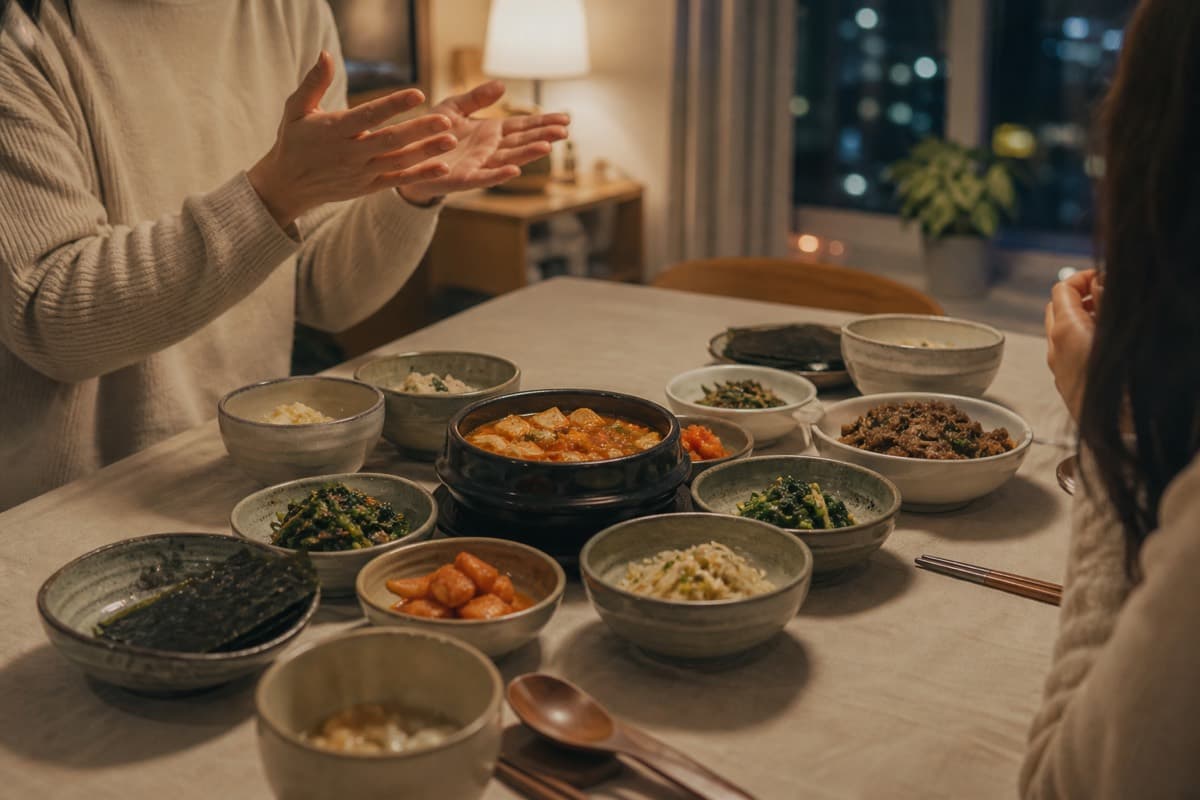
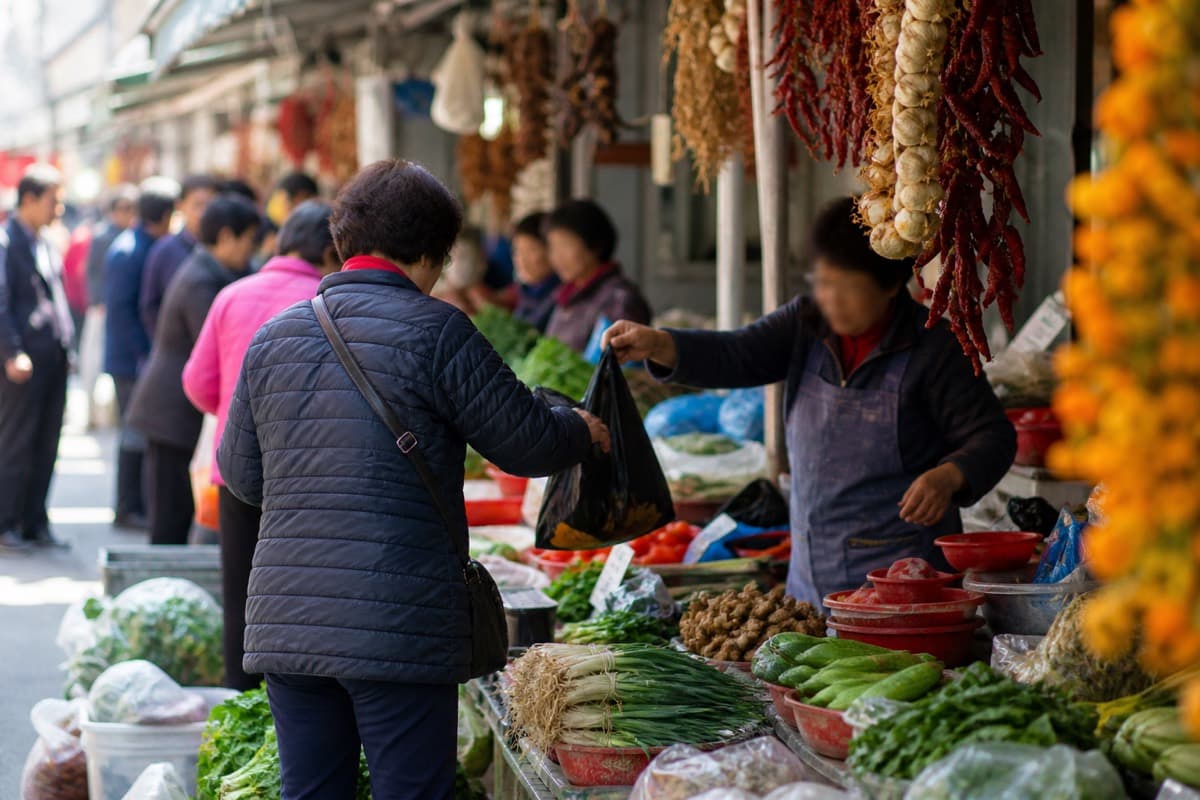
A 반찬가게 (banchangage, side dish shop) is the reason a lot of people in Korea never learn to cook. You point at trays of 밑반찬 (mitbanchan, everyday side dishes), somebody scoops what you point at into a pack, and dinner is solved. Two patterns from the SULSUL workbook do almost all of the talking. Pattern 01 — noun plus 주세요 (juseyo) — buys the food: 이거 조금만 주세요 (igeo jogeumman juseyo), "Just a little of this, please." Pattern 03 — noun plus 있어요? (isseoyo?) — finds the one you can actually eat: 안 매운 거 있어요? (an maeun geo isseoyo?), "Do you have something not spicy?"
- Buy a small portion: 이거 조금만 주세요 (igeo jogeumman juseyo), "Just a little of this, please."
- Ask for a mild option: 안 매운 거 있어요? (an maeun geo isseoyo?), "Do you have something not spicy?"
- Ask how long it keeps: 며칠 정도 가요? (myeochil jeongdo gayo?), "About how many days does it keep?"
- Keep them apart: 따로 담아 주세요 (ttaro dama juseyo), "Please pack them separately."
- Ask for a bit more: 조금만 더 주세요 (jogeumman deo juseyo), "A little more, please."
How do you buy just a small amount of banchan?
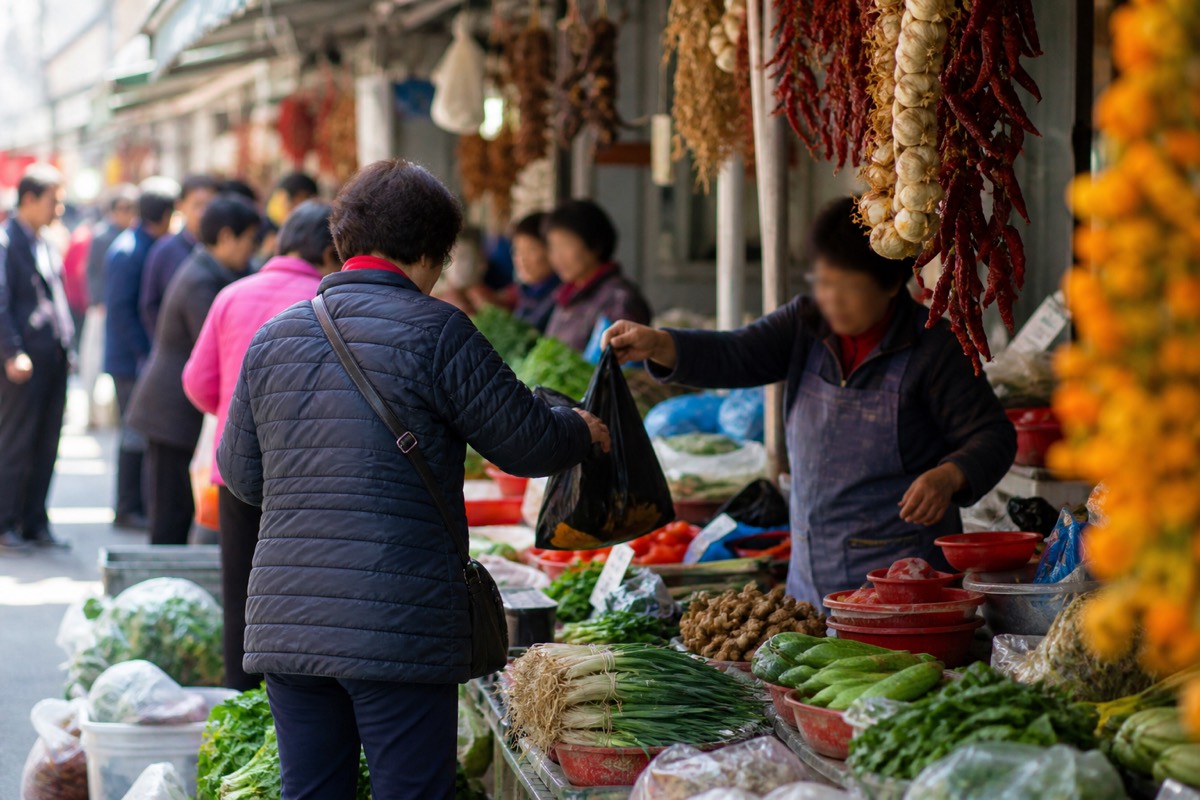
Side dishes are sold by weight, not by portion, and the person behind the counter decides how much to scoop based on what you say. 조금만 (jogeumman), "just a little," is the word that stops a family-sized pack from landing on the scale.
You: 안녕하세요. 이거 조금만 주세요. — annyeonghaseyo. igeo jogeumman juseyo. — "Hello. Just a little of this, please."
Them: 얼마나 드릴까요? — eolmana deurilkkayo? — "How much would you like?"
You: 두 명이 먹을 거예요. — du myeongi meogeul geoyeyo. — "It's for two people."
Answering with the number of people works better than guessing at grams. The shop scoops for two, seals the pack, and moves on. If the pack looks thin once it is on the counter, 조금만 더 주세요 (jogeumman deo juseyo) — Pattern 01 again with 더 (deo), "more" — is a normal thing to say, not a complaint.
| Situation | Say this |
|---|---|
| Buy a small portion | 이거 조금만 주세요 (igeo jogeumman juseyo) |
| Ask for a mild option | 안 매운 거 있어요? (an maeun geo isseoyo?) |
| Ask how long it keeps | 며칠 정도 가요? (myeochil jeongdo gayo?) |
| Pack them separately | 따로 담아 주세요 (ttaro dama juseyo) |
| Ask for a bit more | 조금만 더 주세요 (jogeumman deo juseyo) |

Practice this out loud with SULSUL — the app says it, you repeat it →
Which side dishes are not spicy?
Half a banchan counter is red and half is not, and the red does not always mean hot. Rather than pointing and hoping, ask — and listen for Pattern 63, noun plus (이)나 ((i)na), "A or B," which is how the answer usually comes back.
You: 안 매운 거 있어요? — an maeun geo isseoyo? — "Do you have something not spicy?"
Them: 잡채나 콩자반은 안 매워요. — japchaena kongjabaneun an maewoyo. — "The japchae or the soy-braised beans aren't spicy."
You: 그럼 잡채 주세요. — geureom japchae juseyo. — "Then japchae, please."
The safe names are worth memorizing: 잡채 (japchae, glass noodles), 콩자반 (kongjaban, soy-braised black beans), 멸치볶음 (myeolchibokkeum, stir-fried anchovies), 시금치나물 (sigeumchi namul, seasoned spinach), 계란말이 (gyeranmari, rolled omelette). The reliably hot ones are 오징어채무침 (ojingeochae muchim) and anything labelled 무침 (muchim) in red. If you need to rule out an ingredient rather than heat, the question changes shape — see Korean phrases for food allergies and diet restrictions.
What usually goes wrong at a Korean banchan shop?
The first mistake is buying like it is a supermarket. 밑반찬 is made fresh and keeps for days, not weeks — a fridge full of banchan going soft is the classic first-month-in-Korea story. Ask 며칠 정도 가요? (myeochil jeongdo gayo?) and buy for that many days.
The second is letting everything go into one container. Wet kimchi next to dry anchovies turns both into the same thing by tomorrow, so say 따로 담아 주세요 (ttaro dama juseyo), "please pack them separately" — Pattern 23, verb stem plus 아/어 주세요 (a/eo juseyo). It takes the shop five extra seconds and they expect the request. For the aisles version of the same shopping trip, see Korean phrases for shopping at a supermarket in Korea, and for the counter next door, Korean phrases at a butcher shop in Korea.
Say it out loud, not just in your head
Reading 이거 조금만 주세요 on a screen is not the same as saying it while somebody stands over a tray with a scoop, waiting to know how much.
SULSUL is a speaking gym for exactly that moment: pick a survival pattern, say it out loud, get an instant fix from the AI pronunciation coach, then run the real situation as a mission. The 100-pattern PDF workbook comes along as a bonus.