Korean Phrases at a Butcher Shop in Korea

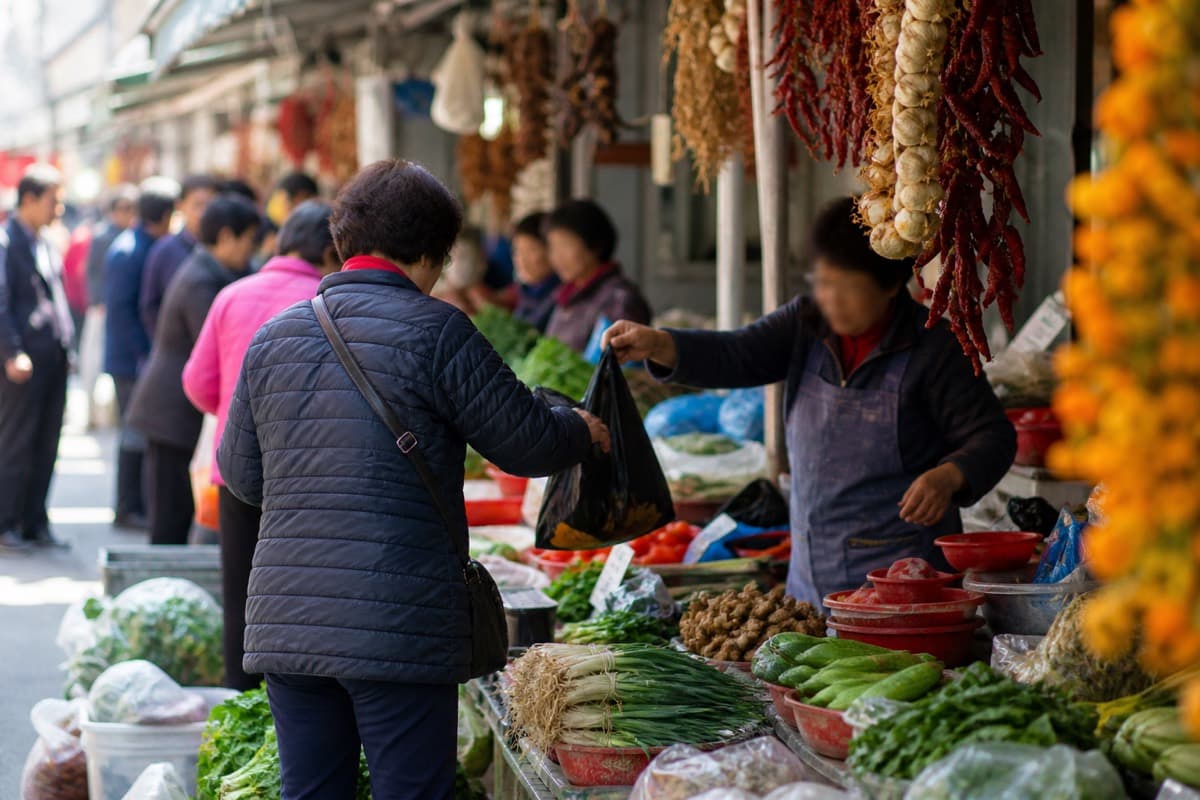
Korean phrases at a 정육점 (jeongyukjeom, butcher shop) come down to two patterns from the SULSUL workbook. Pattern 01 — noun plus 주세요 (juseyo) — orders the meat: 삼겹살 한 근 주세요 (samgyeopsal han geun juseyo), "One geun of pork belly, please." Pattern 23 — verb stem plus 아/어 주세요 (a/eo juseyo) — tells the butcher what to do with it: 얇게 썰어 주세요 (yalkge sseoreo juseyo), "Please slice it thin."
- Order by weight: 삼겹살 한 근 주세요 (samgyeopsal han geun juseyo), "One geun of pork belly, please."
- Say what it is for: 구이용으로 주세요 (guiyongeuro juseyo), "For grilling, please."
- Ask for thin slices: 얇게 썰어 주세요 (yalkge sseoreo juseyo), "Please slice it thin."
- Check the origin: 국내산이에요? (gungnaesanieyo?), "Is it domestic?"
- Ask them to pack it: 포장해 주세요 (pojanghae juseyo), "Please pack it."
How do you order meat by weight in Korea?
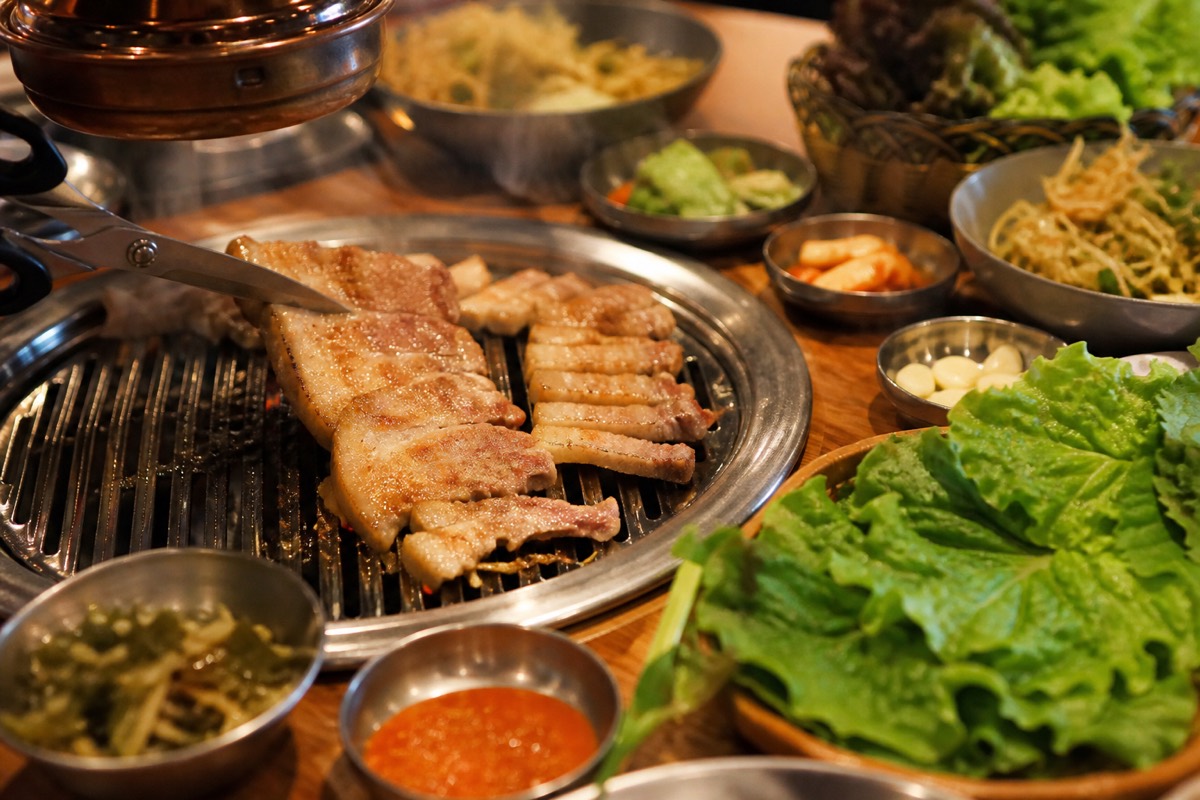
Korean butchers weigh in 근 (geun) as often as in grams. One 근 of meat is 600 grams — enough for two or three people at a grill. 반 근 (ban geun) is half of that. Say the amount first, then 주세요.
You: 안녕하세요. 삼겹살 한 근 주세요. — annyeonghaseyo. samgyeopsal han geun juseyo. — "Hello. One geun of pork belly, please."
Them: 구이용이에요, 찌개용이에요? — guiyongieyo, jjigaeyongieyo? — "For grilling, or for stew?"
You: 구이용으로 주세요. — guiyongeuro juseyo. — "For grilling, please."
That second question catches most learners off guard. Korean butchers cut the same cut differently depending on what you are cooking, so they ask before the knife moves. 구이용 (guiyong) is for grilling, 찌개용 (jjigaeyong) is for stew, 불고기용 (bulgogiyong) is thin bulgogi slices.
| Situation | Say this |
|---|---|
| Order by weight | 삼겹살 한 근 주세요 (samgyeopsal han geun juseyo) |
| Say what it is for | 구이용으로 주세요 (guiyongeuro juseyo) |
| Ask for thin slices | 얇게 썰어 주세요 (yalkge sseoreo juseyo) |
| Check the origin | 국내산이에요? (gungnaesanieyo?) |
| Ask them to pack it | 포장해 주세요 (pojanghae juseyo) |
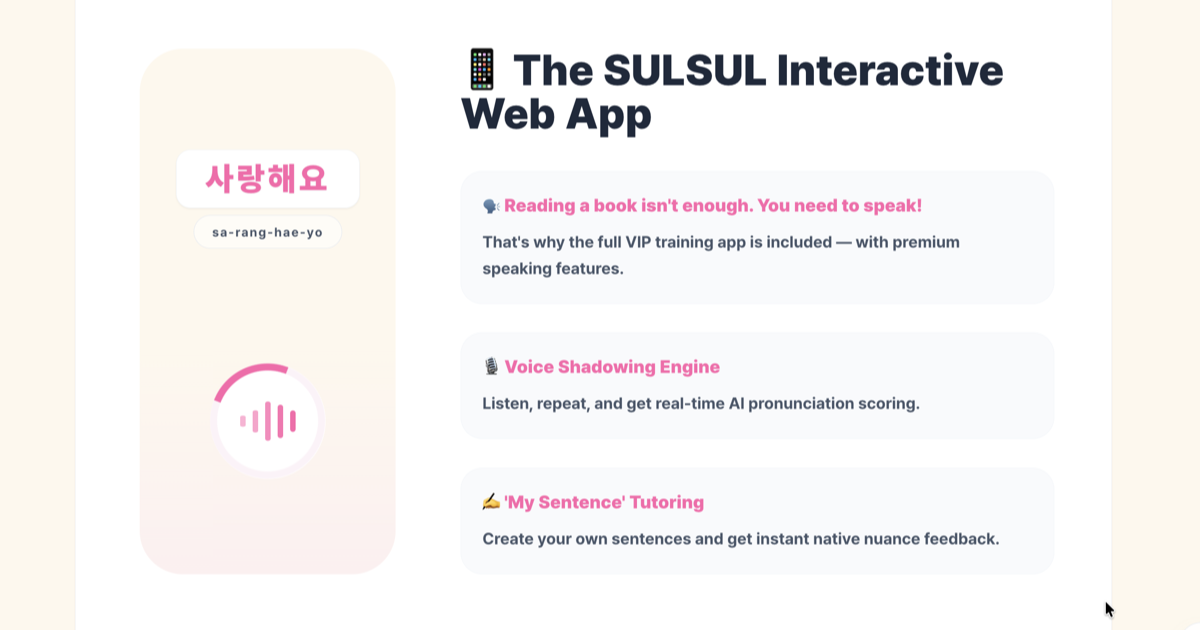
Practice this out loud with SULSUL — the app says it, you repeat it →
What does the butcher ask you back?
The counter conversation is short and it is mostly questions aimed at you. Knowing the three you will hear turns a stressful minute into a nod.
You: 얇게 썰어 주세요. — yalkge sseoreo juseyo. — "Please slice it thin."
Them: 이 정도면 돼요? — i jeongdomyeon dwaeyo? — "Is this much okay?"
You: 네, 괜찮아요. 포장해 주세요. — ne, gwaenchanayo. pojanghae juseyo. — "Yes, that's fine. Please pack it."
If you want to know where the meat came from, ask 국내산이에요? (gungnaesanieyo?), "Is it domestic?" — imported pork and beef are labelled, and the butcher will point at the sign. When you need to compare two trays, Pattern 30 does the work: 이게 저거보다 더 좋아요? (ige jeogeoboda deo joayo?), "Is this one better than that one?"
What usually goes wrong at a Korean butcher shop?
The first mistake is asking for grams when the shop thinks in 근. Say 한 근 or 반 근 and you get a clean answer; say a number the butcher has to convert while three people wait behind you and the conversation stalls. If you truly need a gram amount, 500그램 주세요 (obaek geuraem juseyo) works fine.
The second is skipping 구이용으로 주세요 and getting stew-cut meat home before you notice. The cut is decided at the counter, not in your kitchen — say what you are cooking. For counting and paying at the register, see Korean numbers for paying and counting in Korea, and for the same counter energy at a traditional market stall, Korean phrases for bargaining at markets.
Say it out loud, not just in your head
Reading 얇게 썰어 주세요 on a screen is not the same as saying it while a butcher holds a knife over your pork belly and waits.
SULSUL is a speaking gym for exactly that moment: pick a survival pattern, say it out loud, get an instant fix from the AI pronunciation coach, then run the real situation as a mission. The 100-pattern PDF workbook comes along as a bonus.