Korean Phrases for Finding the Checkout Counter

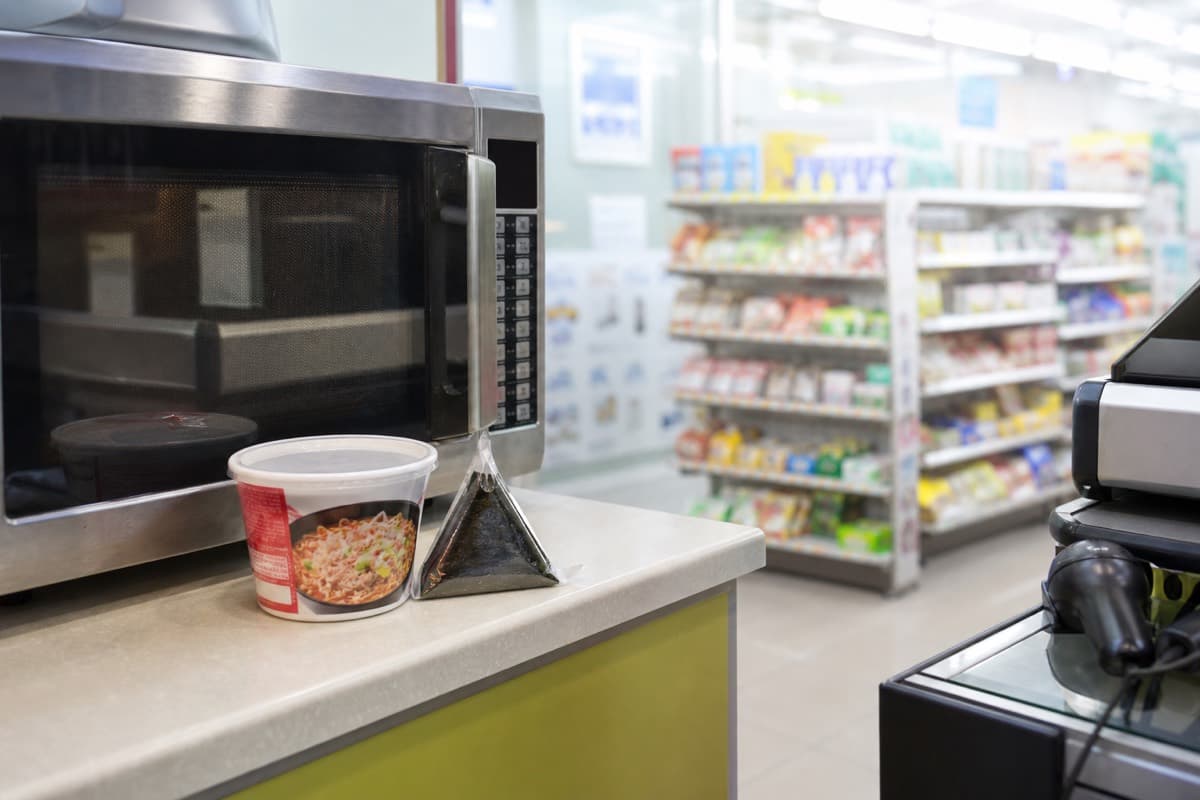
Korean phrases for finding the checkout counter combine a location question and a payment check. Say 계산대 어디예요? (gyesandae eodiyeyo?), "Where is the checkout counter?" when you are holding items and cannot spot the register, then 카드 돼요? (kadeu dwaeyo?), "Can I pay by card?" before you tap. Pattern 04 in the SULSUL workbook — place noun plus 어디예요? (eodiyeyo?) — is the compass line, and Pattern 03 — 돼요? (dwaeyo?) after a noun — handles the card question.
- 계산대 어디예요? (gyesandae eodiyeyo?) — "Where is the checkout counter?"
- 카드 돼요? (kadeu dwaeyo?) — "Can I pay by card?"
- 현금 없어요 (hyeongeum eopseoyo) — "I do not have cash."
- 영수증 주세요 (yeongsujeung juseyo) — "Receipt, please."

How do you ask when you are ready to pay?
Large stores in Korea often hide the register behind a pillar or on another floor. Walk toward an employee with your basket visible — they will point before you finish the sentence.
You: 실례합니다, 계산대 어디예요? — sillyehamnida, gyesandae eodiyeyo? — "Excuse me, where is the checkout counter?"
Them: 저쪽이에요. — jeojjogiyeyo. — "It is over there."
You: 감사합니다. — gamsahamnida. — "Thank you."
| Situation | Say this |
|---|---|
| Where is checkout? | 계산대 어디예요? (gyesandae eodiyeyo?) |
| Card accepted? | 카드 돼요? (kadeu dwaeyo?) |
| No cash on you | 현금 없어요 (hyeongeum eopseoyo) |
| Need a receipt | 영수증 주세요 (yeongsujeung juseyo) |
| How much total? | 얼마예요? (eolmayeyo?) |
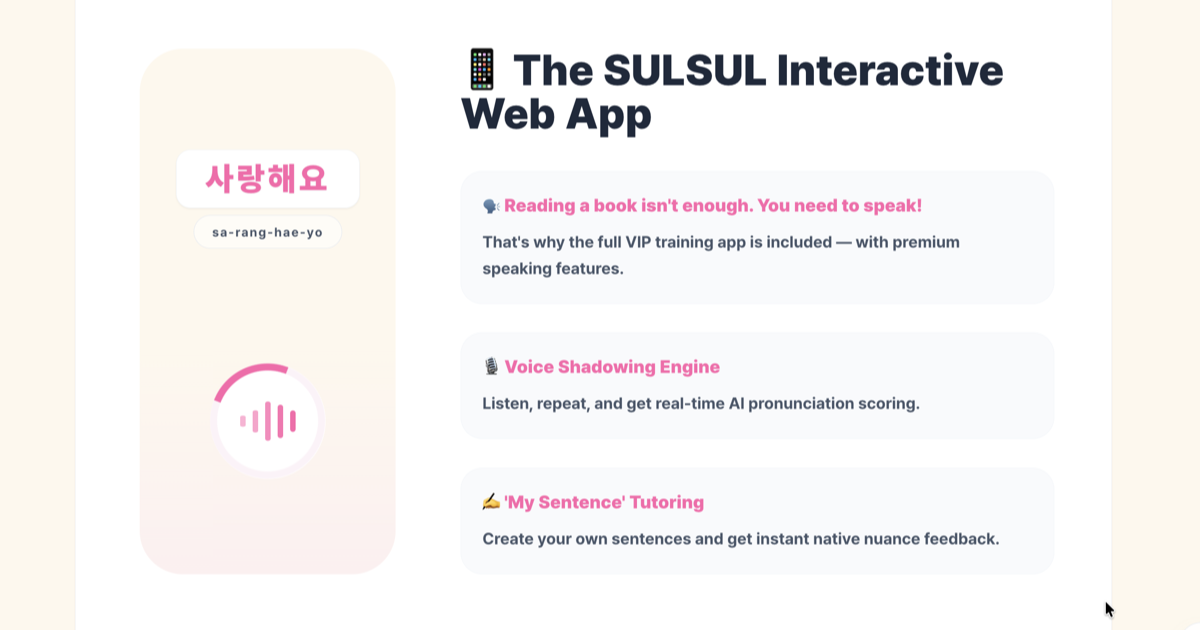
Practice this out loud with SULSUL — the app says it, you repeat it →
What does the cashier say at the register?
Listen for 카드 (kadeu, card), 현금 (hyeongeum, cash), or 영수증 (yeongsujeung, receipt). You only need to catch the keyword and answer 네 (ne) or 아니요 (aniyo).
You: 카드 돼요? — kadeu dwaeyo? — "Can I pay by card?"
Them: 네, 카드 되세요. — ne, kadeu doeseyo. — "Yes, card is fine."
You: 여기서 결제할게요. — yeogiseo gyeoljehalgeyo. — "I will pay here."
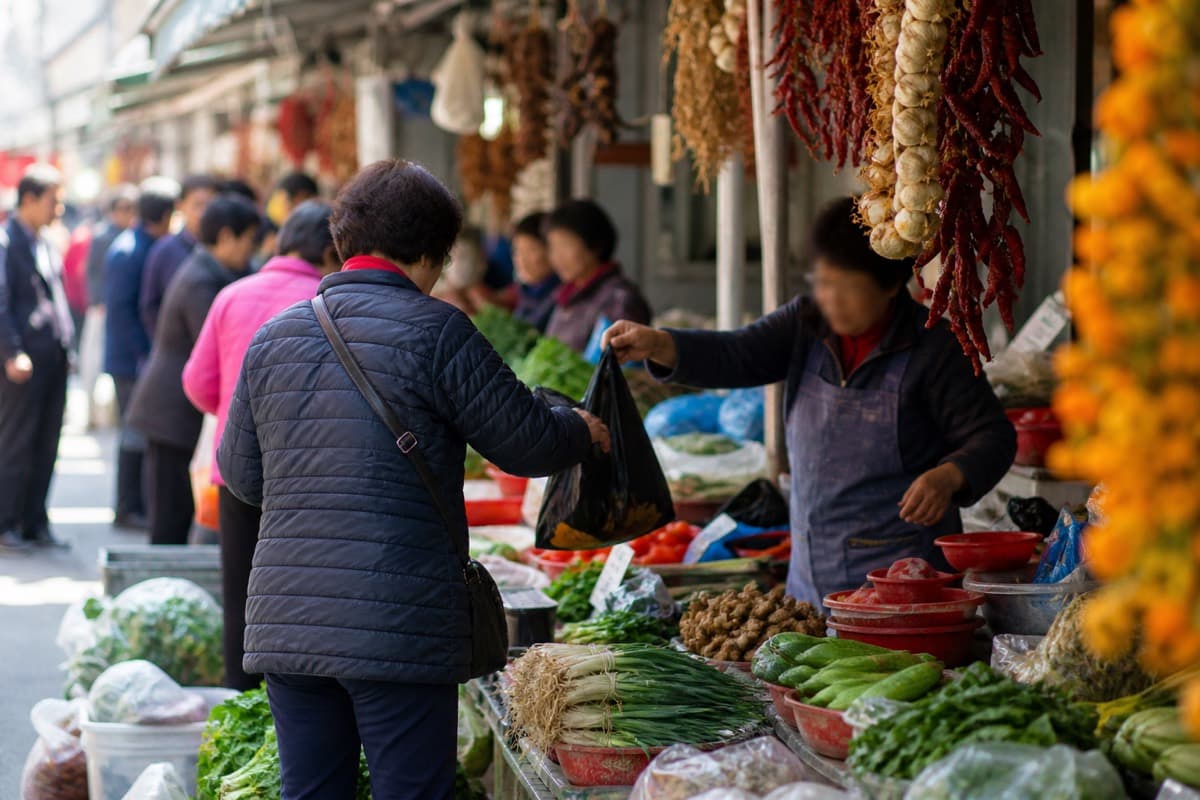
At open-air markets, some stalls are cash-only. If you hear 현금만 (hyeongeum-man, cash only), say 현금 없어요 (hyeongeum eopseoyo) and ask 근처 ATM 어디예요? (geuncheo ATM eodiyeyo?), "Where is the nearest ATM?" For mall shopping phrases, see Korean phrases for shopping at a mall in Korea.
What usually goes wrong?
Travelers often queue at an information desk thinking it is checkout. Look for 계산 (gyesan, payment) on hanging signs — that marks the register, not customer service. Another mistake is tapping your card before the total appears on the screen; wait until the cashier says 카드 대세요 (kadeu daseyo), "Please insert or tap your card."
You: 얼마예요? — eolmayeyo? — "How much is it?"
Them: 12,000원이에요. — man du cheon won-ieyo. — "It is 12,000 won."
You: 영수증 주세요. — yeongsujeung juseyo. — "Receipt, please."
A second slip is walking away without 영수증 (yeongsujeung) when you might need it for a tax refund later. One extra line at the counter costs nothing and saves a trip back.
Say it out loud, not just in your head
Reading 계산대 어디예요? on your phone is not the same as saying it while you are standing in an aisle with a full basket and no register in sight.
SULSUL is a speaking gym for exactly that moment: pick a survival pattern, say it out loud, get an instant fix from the AI pronunciation coach, then run the real situation as a mission. The 100-pattern PDF workbook comes along as a bonus.