Korean Slang Phrases: 뭐래, 어쩌라고, 됐거든, and the Comebacks K-Drama Characters Fire Back


The Korean slang phrases you hear most in K-dramas are not single cool words — they are short comebacks, two or three syllables thrown back in an argument. The quick answer: 뭐래 (mworae) means "whatever" or "what is she even saying," 어쩌라고 (eojjeorago) means "so what?", 됐거든 (dwaetgeodeun) means "forget it, I don't need it," 실화냐 (silhwanya) means "is this for real?", and 너나 잘해 (neona jalhae) means "mind your own business." All of them are casual speech, and most of them sting. Below is what each one really says, how hard it hits, and which ones you can safely use with a Korean friend.
- 뭐래 (mworae) — "whatever / what nonsense." Dismissive.
- 어쩌라고 (eojjeorago) — "so what do you want me to do?" Rude.
- 됐거든 (dwaetgeodeun) — "I'm good, thanks — not." Sulky.
- 실화냐 (silhwanya) — "is this real?" Playful, safe with friends.
- 너나 잘해 (neona jalhae) — "worry about yourself." Sharp.
- 장난해? (jangnanhae?) — "are you kidding me?" Angry.
- 꿈 깨 (kkum kkae) — "dream on." Teasing.
Why these sound so different from textbook Korean
Textbooks teach full sentences: 무슨 말이에요? ("What do you mean?"), 괜찮아요 ("It's okay"). Real arguments do not have time for that. Koreans clip the sentence down to its ending, and the ending carries the attitude.
Take 뭐래. The full sentence is 뭐라고 하는 거야? — "What is (s)he saying?" Cut to two syllables, it stops being a question and becomes an eye-roll. Same with 어쩌라고, which is the leftover of 그래서 나보고 어쩌라고? — "So what do you want me to do about it?"
That is why subtitles often feel flat. "Whatever" is the closest English, but it misses the tone. When you know the full sentence behind each phrase, you hear exactly how rude the character is being.
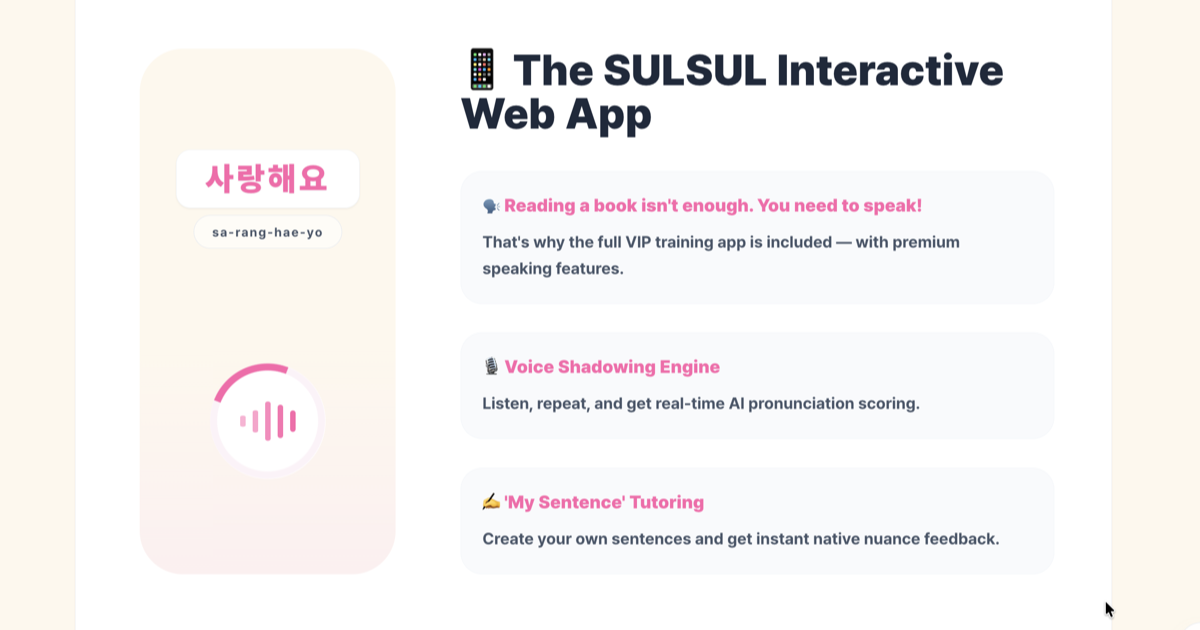
Practice this out loud with SULSUL — the app says it, you repeat it →
The brush-offs: 뭐래 and 어쩌라고
뭐래 is what a character says when someone says something ridiculous — usually a friend bragging or a sibling teasing. It is not a real question. Nobody answers it.
- A: 나 사실 좀 잘생겼잖아. (na sasil jom jalsaenggyeotjana.) — "Let's be honest, I'm kind of handsome."
- B: 뭐래. (mworae.) — "Whatever."
Between close friends, 뭐래 is almost affectionate. To a stranger or someone older, it is an insult.
어쩌라고 is a level up. It refuses responsibility: "That's your problem, not mine." In dramas it shows up when a rich heir is told he hurt someone, or a teenager is told off by a parent. Said with a flat face, it ends the conversation. In 2022, young Koreans turned it into a joke — 어쩔티비 (eojjeol-tibi, "so what, TV") — a silly playground version. If you hear 어쩔티비, it is a joke. Plain 어쩌라고 is not.
The sulky refusals: 됐거든 and 됐어
됐어 (dwaesseo) literally means "it has become" — in practice, "enough" or "no thanks." Add -거든 and you get 됐거든, which adds "and I'm telling you that, so drop it." It is the classic line of a character who is hurt and pretending not to be.
- A: 미안해, 내가 사줄게. (mianhae, naega sajulge.) — "Sorry, I'll buy it for you."
- B: 됐거든. 혼자 먹을 거야. (dwaetgeodeun. honja meogeul geoya.) — "Forget it. I'll eat alone."
A softer cousin is 됐어, 괜찮아 (dwaesseo, gwaenchana) — "It's fine, really." That one you can use. 됐거든 with a raised chin is a fight-starter.
The disbelief lines: 실화냐 and 장난해?

실화냐 comes from 실화 (silhwa, a true story) plus the casual question ending -냐. Literally, "Is this a true story?" It is the safest phrase in this post — you can say it about a gorgeous view, a huge portion of food, or a plot twist.
- 이 가격 실화냐? (i gagyeok silhwanya?) — "Is this price for real?"
- 이 결말 실화냐... (i gyeolmal silhwanya...) — "This ending, seriously...?"
Online you will also see it shortened to 실화임? (silhwaim?).
장난해? (jangnanhae?) — "Are you playing around?" — is the angry version. A boss says it when a report is wrong. A character says it when a friend shows up three hours late. Its stronger form is 지금 장난하냐? (jigeum jangnanhanya?), "Are you messing with me right now?" Only use it as a joke, and only with someone who will laugh.
The put-downs: 너나 잘해 and 꿈 깨
너나 잘해 means "You, do well" — in other words, "fix your own life before you lecture me." It became famous from a film line, and it is still the go-to reply when someone gives unwanted advice. It is sharp. Even between friends, it can land badly if the other person was trying to help.
꿈 깨 (kkum kkae) — "wake up from your dream" — is teasing rather than angry. A friend says they will marry their bias someday; you say 꿈 깨 with a laugh. There is also the sarcastic 퍽이나 (peogina), "oh, sure, as if" — 퍽이나 그러겠다 (peogina geureoketda), "Yeah, like that will happen."
How a K-drama argument actually sounds
Here is a sibling fight, the kind you hear in a family drama:
누나: 너 또 내 충전기 가져갔지? (neo tto nae chungjeongi gajyeogatji?) — "You took my charger again, didn't you?" 동생: 뭐래. 내 거거든. (mworae. nae geogeodeun.) — "Whatever. It's mine." 누나: 실화냐? 이름까지 써 놨는데? (silhwanya? ireumkkaji sseo nwanneunde?) — "Seriously? I even wrote my name on it." 동생: 그래서 어쩌라고. (geuraeseo eojjeorago.) — "So what?" 누나: 장난해? 엄마한테 다 말한다. (jangnanhae? eommahante da malhanda.) — "Are you kidding me? I'm telling Mom." 동생: ...됐거든. 가져가. (...dwaetgeodeun. gajyeoga.) — "...Fine. Take it."
Notice that every line is 반말, casual speech. None of these phrases have a polite 요 form that sounds natural — "뭐래요" or "어쩌라고요" exist, but with 요 they sound even colder, like a customer arguing with staff.
Where learners get these wrong
- Using them with people you just met. These are for siblings, close friends, and arguments. Saying 뭐래 to a coworker is not cute — it is rude.
- Adding 요 to be safe. 어쩌라고요 is not polite; it is cold. If you need a polite way to push back, say 잘 모르겠는데요 (jal moreugenneundeyo, "I'm not so sure").
- Treating 뭐래 as a real question. If you want to know what someone said, ask 뭐라고 했어? (mworago haesseo?). 뭐래 does not want an answer.
- Pronouncing 실화냐 in three hard beats. The ㅎ almost disappears after ㄹ, so it comes out close to si-rwa-nya.
- Missing the tone. The same 됐어 can mean "it's fine" or "forget you." Listen to how the drama character says it, then copy the tone, not just the words.
Start with the friendly ones
If you want to try these out, start with 실화냐 and 꿈 깨 — they are playful and hard to get wrong. Save 뭐래 for a close friend who is teasing you first. Leave 어쩌라고 and 너나 잘해 in the drama. For more lines from the same scenes, here are the K-drama expressions characters say when the plot turns, the fed-up lines like 짜증 나 and 귀찮아, and the everyday slang words young Koreans use.
SULSUL is a speaking gym for exactly that step: pick a pattern, say it out loud, get an instant fix from the AI pronunciation coach, then run the real situation as a mission. The 100-pattern PDF workbook comes along as a bonus.
Now say it out loud
SULSUL says the phrase, you repeat it, and it tells you what came out wrong — 100 survival patterns for cafes, taxis and small talk in Seoul.
Start speaking Korean →