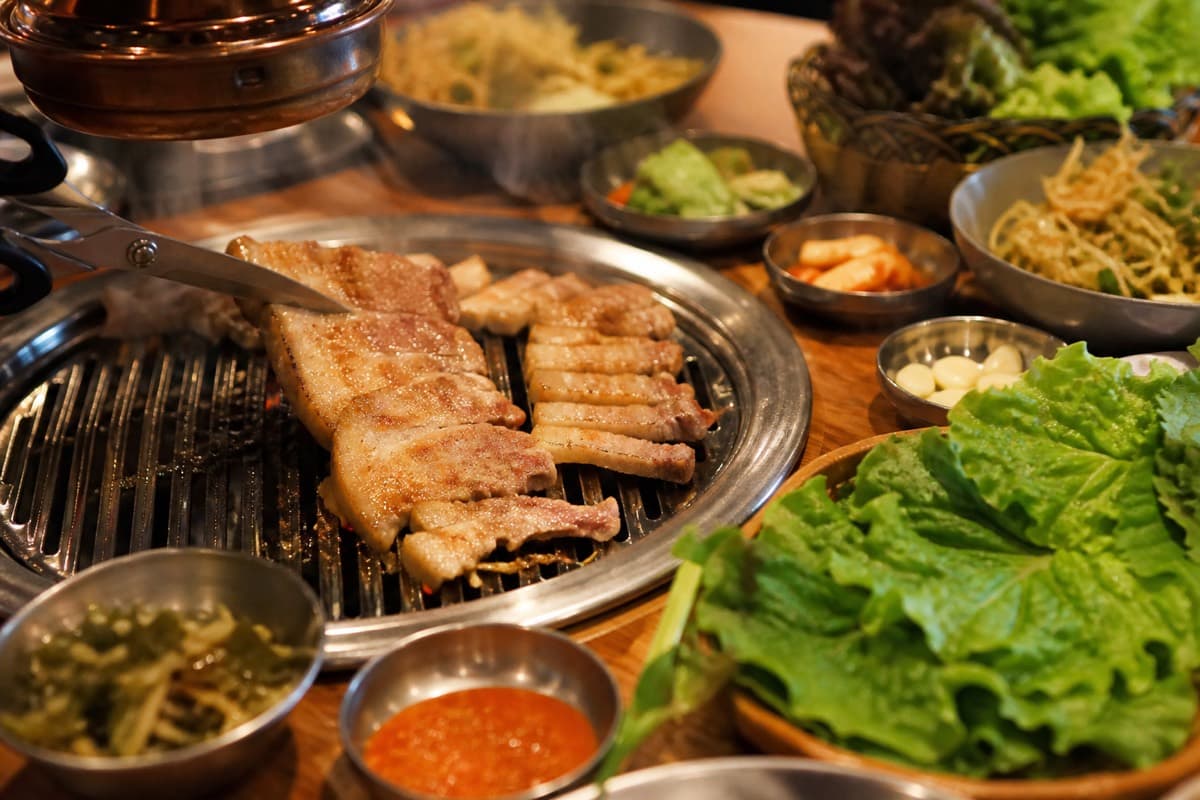
What Does Jagiya Mean in Korean?

자기야 (jagiya) is what a Korean couple calls each other instead of using a name. The nearest English words are "babe," "honey," or "sweetie," and like those, it is a replacement for the name, not a description — you say it straight to the person's face, at the front of the sentence, the way subtitles keep showing it. Two things surprise people who learned it from dramas. First, it is completely gender-neutral: a man says it to his girlfriend and she says the exact same word back, unlike 오빠 or 누나. Second, the word underneath it, 자기 (jagi), plain-dictionary means "oneself" — the same 자기 sitting inside 자기소개 (jagisogae), "self-introduction." Somewhere along the way "self" became "my other self," and then it became "babe."
- The pet name: 자기야 (jagiya) — "babe," "honey."
- Without the calling particle: 자기 (jagi) — same word, used inside a sentence.
- The married-couple version: 여보 (yeobo) — "dear."
- A normal sentence with it: 자기야, 어디야? (jagiya, eodiya?) — "Babe, where are you?"
- Who says it: both partners, either gender, once the relationship is real.
Why there is a 야 on the end
야 is Korea's calling particle. It is the same 야 that turns a friend's name into a shout — 민수야! (minsuya!) — and it attaches only in 반말 (banmal), casual speech. So 자기야 is the form you use when you are calling the person, and 자기 is the form that lives inside the rest of the sentence.
자기야, 자기 지금 뭐 해? — jagiya, jagi jigeum mwo hae? — "Babe, what are you doing right now?"
That doubling looks odd written out, but it is ordinary: the first one gets their attention, the second one stands where "you" would stand in English. Korean avoids the word "you" between people who are close, and a pet name is one of the things that fills the hole.
Because 야 belongs to 반말, 자기야 carries the whole casual register with it. Couples pair it with 반말 endings — 해, 했어, 뭐야 — not with -요 or -습니다. If you are still working out which ending belongs where, how to greet someone at different Korean politeness levels lays the ladder out in order.
Practice this out loud with SULSUL — the app says it, you repeat it →
When couples actually start using it
Not on date one. 자기야 is a milestone word, somewhere after the relationship is official and the names have started feeling too formal. Before that, people use the name plus 야, or 오빠 and 누나, and dramas treat the switch to 자기야 as a scene worth writing — the moment the character stops saying a name.
Him: 자기야, 나 지금 출발했어. — jagiya, na jigeum chulbalhaesseo. — "Babe, I just left."
Her: 응, 천천히 와. 자기 밥은 먹었어? — eung, cheoncheonhi wa. jagi babeun meogeosseo? — "Okay, come slowly. Did you eat, babe?"
Him: 아직. 자기랑 같이 먹으려고. — ajik. jagirang gachi meogeuryeogo. — "Not yet. I was going to eat with you."
Notice 자기랑 — the pet name takes particles like any other noun: 자기가, 자기한테, 자기 때문에. It behaves grammatically like a name, which is exactly what it is standing in for.

자기야 in KakaoTalk
Texting is where the word multiplies. Korean couples type it several times in a single conversation, usually with ㅎㅎ or ㅠㅠ trailing behind, and the written shortcuts are their own small vocabulary.
| Korean | Romanization | What it means |
|---|---|---|
| 자기야 뭐해? | jagiya mwohae? | Babe, what are you up to? |
| 자기 어디야? | jagi eodiya? | Where are you, babe? |
| 우리 자기 | uri jagi | "my babe" — the 우리 makes it warmer |
| 자기야 보고싶어 | jagiya bogosipeo | Babe, I miss you |
| 자기야 사랑해 | jagiya saranghae | Babe, I love you |
| 자기야 잘 자 | jagiya jal ja | Night, babe |
우리 자기 is worth stealing. 우리 means "our," and Koreans stick it in front of the people who belong to them — 우리 엄마, 우리 오빠, 우리 자기. It does not mean the person is shared. It means they are yours. The rest of the couple-texting habits, emoticons included, sit in Korean phrases for KakaoTalk texting.
The pet names that live next to it
| Korean | Romanization | Who uses it |
|---|---|---|
| 자기야 | jagiya | Dating or married, both genders, very common |
| 여보 | yeobo | Married couples, "dear" — rarely used before marriage |
| 애기야 | aegiya | "Baby" — playful, a drama favourite |
| 내 사랑 | nae sarang | "My love" — sweet but written more than spoken |
| 오빠 / 누나 | oppa / nuna | Age-based, and only one partner can use it |
| 짝꿍 | jjakkung | "My other half," slightly goofy and affectionate |
The line worth memorising is 여보 versus 자기야. 여보 is the married word. Couples who have been together for decades use it, parents use it in front of the kids, and using it while dating sounds like a joke about getting married — which is precisely why drama characters slip and say it, then panic. 자기야 covers everything from six months in to a golden anniversary.
And unlike 오빠 or 누나, 자기야 does not care who is older. Those two are built on age and only flow one direction; 자기야 flows both ways at once. If you want the full map of who calls whom what, Korean family titles: how to address people in Korea sorts it out.
When 자기 has nothing to do with romance
Two non-romantic uses catch learners off guard.
자기 as "oneself." In writing and in the news, 자기 is a plain pronoun: 자기 일 (jagi il), "one's own work"; 자기관리 (jagigwalli), "self-discipline"; 자기소개서 (jagisogaeseo), the cover letter every Korean job applicant dreads. Same two syllables, zero affection.
자기 as casual "hey." You will also hear older women use 자기 on a younger woman — a hairdresser, a shop owner, a neighbour: 자기, 이거 한번 입어봐 (jagi, igeo hanbeon ibeobwa), "Try this on, hon." It is friendly, it is a little familiar, and it is one of those words that only travels downward in age. A foreigner using it this way almost always lands wrong, so leave this one to the receiving end.
Mistakes K-drama fans make with 자기야
Using it on a crush. 자기야 announces a relationship that already exists. Said to someone who has not agreed to be your partner, it is not flirty — it is presumptuous. The word for that stage is their name.
Using it on a friend. Calling a Korean friend 자기야 reads as either a come-on or an impression of somebody's mother. Friends get names, 야, or 친구야.
Mixing it with polite endings. 자기야, 어디 가세요? clashes: a 반말 pet name wearing a 존댓말 suit. Pick one register and stay in it.
Hearing "jag-ee-ya." The first syllable is ja as in "jar," and the g is soft, close to a k — ja-gi-ya, three even beats with no stress thrown on any of them.
Expecting every couple to use it. Plenty of Korean couples never do. Some use names for years, some use 오빠, some invent something ridiculous. 자기야 is the default, not the rule.
Say it out loud, not just in your head
자기야 is three syllables you have heard hundreds of times and still will not produce cleanly the first time it matters — the rhythm is flatter than the one your mouth wants to give it.
SULSUL is a speaking gym for that gap: pick a pattern, say it out loud, get an instant fix from the AI pronunciation coach, then run the real conversation as a mission. The 100-pattern PDF workbook comes along as a bonus.