Mean in Korean: 나빠, 못됐어, 치사해 — What K-Drama Characters Say When Someone Is Unkind


The most common way to say "you're mean" in Korean is 나빠 (na-ppa) — literally "bad." It is what a K-drama character says, half-angry and half-hurt, when someone teases them, forgets a promise, or leaves without saying goodbye. If you want something stronger, 못됐어 (mot-dwae-sseo) means "you're a nasty person," and if someone is being petty or stingy, the word is 치사해 (chi-sa-hae). Which one you pick changes the whole feeling of the line, so here is how they work.
- 나빠 (na-ppa) — "you're mean / that's not nice." Soft, often with a pout.
- 못됐어 (mot-dwae-sseo) — "you're nasty / you're horrible." A real accusation.
- 치사해 (chi-sa-hae) — "that's petty / you're so stingy." Small-minded meanness.
- 심술궂다 (sim-sul-gut-da) — "spiteful, mean-spirited." Describes a person's nature.
- 너무해 (neo-mu-hae) — "that's too much / that's harsh." Complains about an action.
나빠: the "you're mean" you hear in every romance
나빠 comes from 나쁘다 (na-ppeu-da, "to be bad"). Said to a person, it does not mean "you are an evil person." It means "what you just did hurt me," and it often comes with crossed arms or a turned back. In a romance, the lead says 오빠 나빠! (oppa nappa!, "You're so mean!") when the boyfriend teases her, and nobody thinks the relationship is over.
That softness is why 나빠 is the safe, everyday choice. Some common shapes:
- 나빠. — "You're mean." (to a close friend or partner)
- 진짜 나빠. — "You're really mean."
- 나쁜 사람. (na-ppeun sa-ram) — "You bad person." Common in sad scenes, said quietly.
- 나빴어요. (na-ppa-sseo-yo) — "That was mean." Polite, about something already done.
Notice the last one. With people you speak politely to, Koreans usually describe the action as bad (그건 좀 나빴어요, "that was a bit mean") instead of calling the person bad.
Practice this out loud with SULSUL — the app says it, you repeat it →
못됐어: when it stops being cute
못됐어 is from 못되다, "to turn out badly" — as in a person who did not grow up right. It is much heavier than 나빠. In a K-drama, this is what the heroine says to the scheming rival, or what a mother-in-law hears behind her back: 진짜 못됐다 (jin-jja mot-dwaet-da, "she's truly nasty").
Use it about behavior that is cruel on purpose: bullying, lying to hurt someone, saying something cutting in public. Two useful shapes:
- 너 왜 이렇게 못됐어? (neo wae i-reo-ke mot-dwae-sseo?) — "Why are you so nasty?"
- 말을 왜 그렇게 못되게 해? (ma-reul wae geu-reo-ke mot-doe-ge hae?) — "Why do you talk so meanly?"
Said to a friend as a joke, 못됐어 can still be playful, but it lands harder than you think. Save it for when you mean it.
치사해 and 너무해: petty and harsh
Not all meanness is cruelty. Sometimes it is just small and annoying. That is 치사해. Your friend eats the last piece of fried chicken without asking, refuses to share their umbrella, or keeps score of who paid last time — 아, 치사해! (a, chi-sa-hae!, "Ugh, so petty!"). Siblings in family dramas throw it at each other constantly. Its cousin 쪼잔해 (jjo-jan-hae) means "stingy, small-minded" and is a little more slangy.
너무해 (neo-mu-hae) means "that's too much." It complains about what someone did, not who they are, which makes it a good middle choice. 너무해요 (neo-mu-hae-yo) is polite enough to say to a coworker who dumped extra work on you.

심술궂다: describing a mean person
When you are not talking to someone but about them, Koreans often use 심술궂다 (sim-sul-gut-da) or the noun 심술 (sim-sul, "spite"). 심술궂은 사람 is "a mean-spirited person" — the kind who hides your shoes for fun. 심술 부리지 마 (sim-sul bu-ri-ji ma) means "stop being spiteful," a line parents say to a child who knocks over a sibling's blocks.
Two other describing words you will see in subtitles:
- 성격이 나쁘다 (seong-gyeo-gi na-ppeu-da) — "has a bad personality," the plain adult way to call someone mean.
- 차갑다 (cha-gap-da) — "cold." A distant, unfriendly person is 차가운 사람, which is "cold" more than "mean."
How it sounds in a scene
Here is a short scene between two friends, 하나 and 준호, after 준호 reads her diary out loud as a joke:
하나: 야! 그거 내 일기잖아. 진짜 나빠. (Hey! That's my diary. You're really mean.)
준호: 장난이야, 장난. 한 줄만 읽었어. (It's a joke, a joke. I only read one line.)
하나: 한 줄이든 뭐든, 그건 좀 너무했어. (One line or not, that was a bit much.)
준호: 알았어, 미안해. 떡볶이 살게. (Okay, sorry. I'll buy you tteokbokki.)
하나: 치사하게 음식으로 넘어가려고? …그래도 먹을래. (Trying to get out of it with food? That's cheap. …I'll still eat it, though.)
Three different "mean" words, three different jobs: 나빠 for the hurt, 너무했어 for the action, and 치사하게 for the cheap move at the end. Nobody says 못됐어, because nobody here is actually cruel.
Mistakes learners make
Using 못됐어 for small things. A learner hears it in a revenge drama and uses it when a friend is five minutes late. To a Korean ear, that sounds like a real insult. For small stuff, 나빠 or 너무해 is right.
Saying 나빠 to someone older or in a formal setting. 나빠 is banmal (casual speech). To a teacher or boss, calling them "bad" at all is risky. Talk about the situation instead: 좀 서운했어요 (jom seo-un-hae-sseo-yo, "I felt a little hurt").
Translating "mean" as 의미. 의미 (ui-mi) is "meaning," as in "what does this word mean." "You're mean" has nothing to do with it. If you type "mean" into an app with no context, check which one you got.
Forgetting the tone does half the work. 나빠 with a smile and a pout is flirting. 나빠 said flat and quiet, eyes down, is a real hurt. Dramas lean on this constantly — listen for it.
Practice the lines out loud
The fastest way to feel the difference between these words is to say them. Try 진짜 나빠 with a pout, then 너 왜 이렇게 못됐어? with real anger, then 아, 치사해! like a younger sibling. Your voice will tell you which one fits before any dictionary does. For the next step, see what to say in Korean when you're angry, how to say you're annoyed, the comebacks K-drama characters fire back, what 닥쳐 really means, and what characters say when the plot turns.
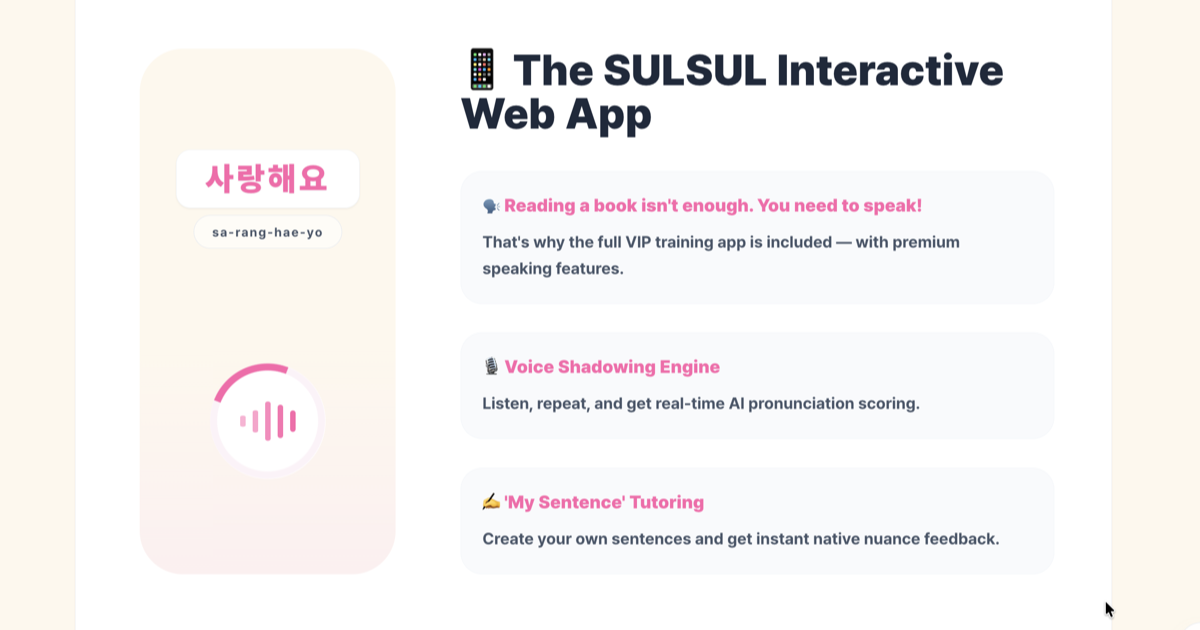
SULSUL is a speaking gym for exactly that step: pick a pattern, say it out loud, get an instant fix from the AI pronunciation coach, then run the real situation as a mission. The 100-pattern PDF workbook comes along as a bonus.
Now say it out loud
SULSUL says the phrase, you repeat it, and it tells you what came out wrong — 100 survival patterns for cafes, taxis and small talk in Seoul.
Start speaking Korean →