Michin Saekki Meaning in English: What 미친 새끼 Really Says, and Why 미쳤다 Can Be a Compliment


Michin saekki (미친 새끼) means roughly "crazy bastard" or "you psycho" in English. 미친 (michin) means "crazy," and 새끼 (saekki) literally means a young animal, like a pup or a cub, but aimed at a person it becomes a crude insult. Put together, it is one of the strongest things a K-drama character says out loud. Subtitles often soften it to "you crazy jerk" or "lunatic," but to a Korean ear it is closer to swearing. Recognize it, enjoy it in the scene, and don't say it to anyone.
- 미친 새끼 (mi-chin sae-kki) — "crazy bastard." Very strong.
- 미친놈 (mi-chin-nom) — "crazy guy," "lunatic." Strong.
- 미쳤어? (mi-cheo-sseo?) — "Are you crazy?" Casual, can be serious or joking.
- 미쳤다 (mi-cheot-da) — "It's insane." Often praise.
- 너 제정신이야? (neo je-jeong-si-ni-ya?) — "Are you in your right mind?" Sharp but not a swear.
Breaking down the two words
미친 comes from the verb 미치다 (mi-chi-da), "to go crazy" or "to lose your mind." In front of a noun it works like an adjective: 미친 사람, "a crazy person." On its own the word is not a swear. Koreans say it about weather, prices, and traffic all the time.
새끼 is the part that makes the phrase ugly. Its first meaning is innocent. A farmer talks about 강아지 새끼 (a puppy) or 새끼 고양이 (a kitten). But calling a human a 새끼 treats them like an animal, and it is one of the most common rough words in Korean. You will hear it in many combinations, and almost all of them are insults.
So 미친 새끼 is not two bad words stacked up. It is a mild word plus a crude word, and the crude word carries the punch.
Practice this out loud with SULSUL — the app says it, you repeat it →
How it sounds in a drama
Romanizations vary: michin saekki, michin sekki, michinsaekki. All of them point to the same phrase. The ㄲ in 새끼 is a tense double consonant, so it comes out as a hard, clipped kk with no breath after it. That tight sound is part of why the word sounds so aggressive. Actors often spit the first syllable, 새!, and drop their voice on 끼.
You will hear it in a few kinds of scenes:
- A betrayal is revealed. The hero finds out who set him up and says it under his breath, without shouting.
- Someone does something reckless. A friend jumps in front of a car to save a stranger, and the other friend yells it in shock, half furious and half relieved.
- Gangster and crime dramas. Here it is almost background noise, and it shows how rough the world of the show is.
Korean TV often bleeps it or cuts the line short. Streaming dramas let it through more often, which is why international viewers search for it.
How strong is it, really?
Here is a rough scale, from mild to harsh:
- 미쳤어? — "Are you crazy?" Fine between friends, even playful.
- 너 제정신이야? — "Are you out of your mind?" Cold and serious, but clean.
- 미친놈 / 미친년 — "Crazy guy / crazy woman." Rude name-calling. 미친년 is especially harsh toward women.
- 이 새끼 / 저 새끼 — "This bastard / that bastard." A crude way to point at someone.
- 미친 새끼 — "Crazy bastard." A real insult. Said to a stranger, it starts a fight.
The strength also depends on who says it to whom. A younger person saying it to an older person breaks two rules at once: the word and the age line. That is why the scene where a younger character says it to a boss or an elder always lands as a turning point.
When friends say it laughing
Here is the part learners find confusing. Very close Korean friends, usually men who have known each other since school, do sometimes say 미친 새끼 ㅋㅋㅋ when a friend pulls off something absurd. It means something like "you lunatic, I can't believe you did that." The laugh and the history behind it change everything.
That is earned, not borrowed. As a learner, you don't have years of friendship to protect the joke, and your accent tells people you are copying a drama. The safe teasing line is just 미쳤어? ㅋㅋ, which carries the same "you're nuts" feeling without the crude word.

미쳤다: the same root as praise
Drop 새끼 and the word turns positive fast. In fan talk and group chats, 미쳤다 is one of the highest compliments there is:
- 이 장면 미쳤다. — "This scene is insane."
- 연기 미쳤어. — "The acting is unreal."
- 비주얼 미쳤다. — "The visuals are ridiculous." (in a good way)
- 미친 엔딩. — "An insane ending."
A related word is 미친 듯이 (mi-chin deu-si), "like crazy": 미친 듯이 웃었어, "I laughed like crazy." None of these are rude. If a Korean friend texts you 미쳤다 after the finale, they loved it. For more words fans use while watching, see K-drama words for watching.
A short scene to see the difference
A: 야, 나 어제 회사 그만뒀어. (Hey, I quit my job yesterday.) B: 뭐? 미쳤어? (What? Are you crazy?) A: 대신 내일 제주도 가. (Instead, I'm going to Jeju tomorrow.) B: 와, 진짜 미쳤다. 부럽다. (Wow, that's actually insane. I'm jealous.)
Same root, two feelings: shock first, then admiration. And no 새끼 anywhere, which is how most real conversations go.
Mistakes to avoid
Trusting the subtitle. If the English says "jerk," check the Korean. 이 자식 and 미친 새끼 can both become "jerk," but they sit far apart on the scale. Our post on what 자식 means covers the milder one.
Using 미친 about people as praise. 미친 노래 ("an insane song") is fine. 미친 사람, said about your friend's new partner, is not a compliment, even if you meant "they're amazing." Praise the thing, not the person: 노래 미쳤다, not 너 미친 사람이야.
Thinking it is "just slang." Many learners file it next to 대박 and 헐. It isn't in that group. For the full list of rough words and how hard each one hits, see Korean bad words in K-dramas.
Say the safe versions out loud
You never need to say 미친 새끼. The lines worth having ready are the ones that come up with real friends: 미쳤어? when someone tells you wild news, and 진짜 미쳤다 when a show blows you away. Say each one out loud three times. Notice how the tense 쳤 in 미쳤다 snaps short, the same way the ㄲ does in the word you are skipping.
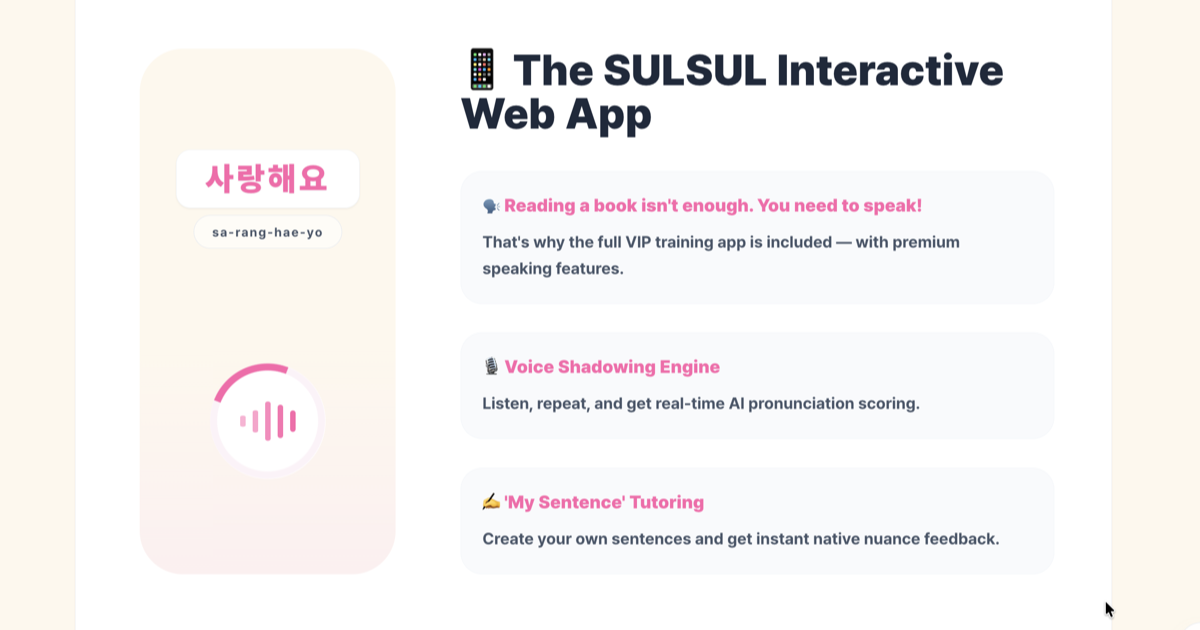
SULSUL is a speaking gym built for exactly this: pick a pattern, say it out loud, get an instant fix from the AI pronunciation coach, then run the whole situation as a mission. The 100-pattern PDF workbook comes along as a bonus. For more lines straight from the shows, see K-drama lines every fan knows by heart.
Now say it out loud
SULSUL says the phrase, you repeat it, and it tells you what came out wrong — 100 survival patterns for cafes, taxis and small talk in Seoul.
Start speaking Korean →