Can You Drink and Walk in Korea? Alcohol in Public, Coffee on the Street, and the Korean on the Signs

Yes, you can drink and walk in Korea. There is no nationwide open-container law, so carrying a can of beer down the street, sharing soju at a plastic table outside a convenience store, or opening a drink on a picnic mat by the Han River is legal and very common. Coffee in hand is even more ordinary. The limits are local and practical: some parks, playgrounds, and riversides are marked 금주구역 (geum-ju-gu-yeok), a no-drinking zone where you can be fined, takeout cups can get you refused on a city bus, and being loudly drunk is a problem anywhere. When you're not sure, ask one line: 여기서 마셔도 돼요? (yeo-gi-seo ma-syeo-do dwae-yo?), "Can I drink here?"
- 여기서 마셔도 돼요? — Can I drink here?
- 들고 가도 돼요? — Can I take it with me?
- 금주구역 — no-drinking zone
- 음주 금지 — no drinking (alcohol)
- 음료 반입 금지 — no drinks inside
- 신분증 보여 주세요. — Please show me your ID.
Alcohol on the street: legal, with local exceptions
Most visitors arrive expecting rules like the ones in the US or parts of Europe, and are surprised by how relaxed Korea is. Walking with a beer is not a crime. Neither is drinking on a bench, at a riverside park, or at the folding tables many convenience stores set up outside. On a warm evening along the Han River, half the picnic mats have a can of beer next to a box of fried chicken, which is why chimaek night is practically a summer tradition.
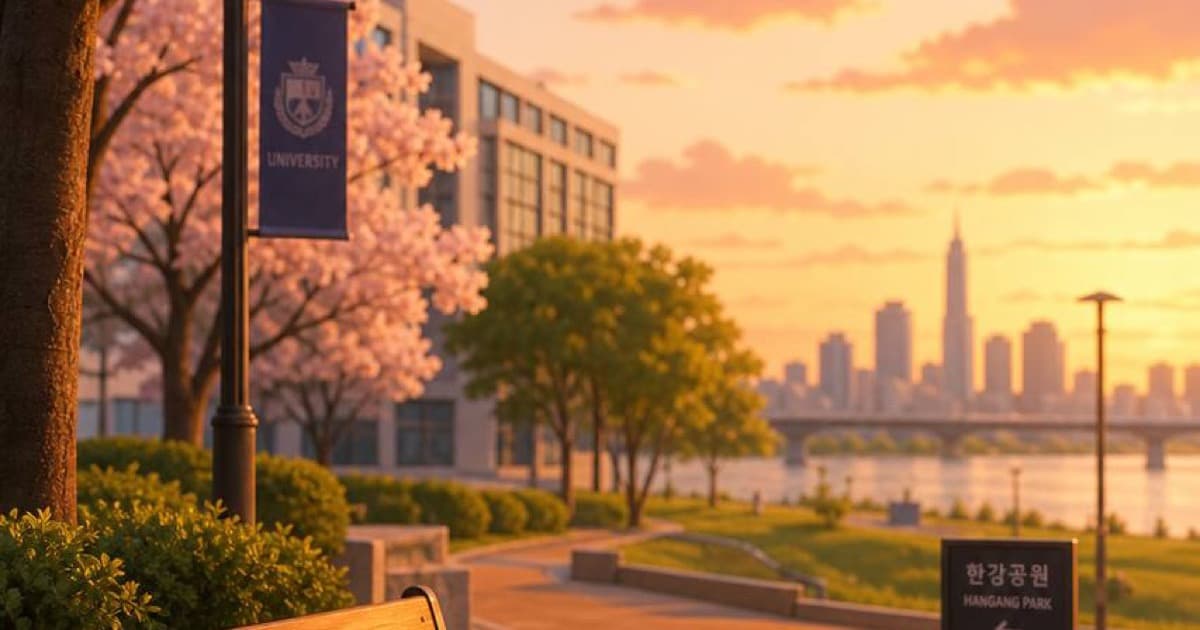
What changed in recent years is that local governments can now designate specific public places as no-drinking zones. City parks, children's playgrounds, and some riverside areas have posted signs, and drinking inside the marked area can bring a fine. These zones are local, so the honest answer to "is it allowed here?" is often "look at the sign." The sign is usually at the entrance, on a lamp post, or on a board near the restrooms.
Two things stay true everywhere. The legal drinking age is 19, counted by birth year rather than your exact birthday, and stores do ask foreigners for ID, so carry your passport or a photo of it. And being visibly drunk, shouting, or picking fights in public can be fined as a minor offense, no matter where you are standing.
Practice this out loud with SULSUL — the app says it, you repeat it →
Coffee, bubble tea, and the bus rule
If your question is about a takeout coffee rather than a beer, the answer is an easy yes. Koreans walk everywhere with iced Americanos, even in winter. The one place it trips people up is the city bus. Seoul's rules let drivers refuse passengers holding drinks in disposable takeout cups, because a sudden stop sends them across the floor. A sealed bottle or a tumbler with a lid is fine. Finish the cup at the bus stop, or ask the driver before you step on. We cover the bus and subway side in detail in can you eat while walking in Korea.
Inside shops, cafes, and museums, look for 음료 반입 금지 on the door. It means "no drinks brought in," and the staff will usually point you to a shelf by the entrance where you can leave your cup.
The one pattern that answers every version of this question
Every "is this okay?" question here is the same Korean pattern: a verb plus -아도/어도 돼요?, "is it okay if I…?" It's one of the first permission patterns in the SULSUL textbook, and it works with any action.
- 마시다 (to drink) → 마셔도 돼요? — Can I drink?
- 먹다 (to eat) → 먹어도 돼요? — Can I eat?
- 앉다 (to sit) → 앉아도 돼요? — Can I sit?
- 들고 가다 (to carry along) → 들고 가도 돼요? — Can I take it with me?
Put 여기서 (yeo-gi-seo, "here") in front and you have a complete question: 여기서 맥주 마셔도 돼요? "Can I drink beer here?" The answer comes back in the same shape. 네, 마셔도 돼요 means "Yes, you can." 아니요, 마시면 안 돼요 means "No, you shouldn't drink here." That -면 안 돼요 ending is the polite way Koreans say "don't," and you'll hear it from park staff, shop owners, and bus drivers alike.
At the convenience store table
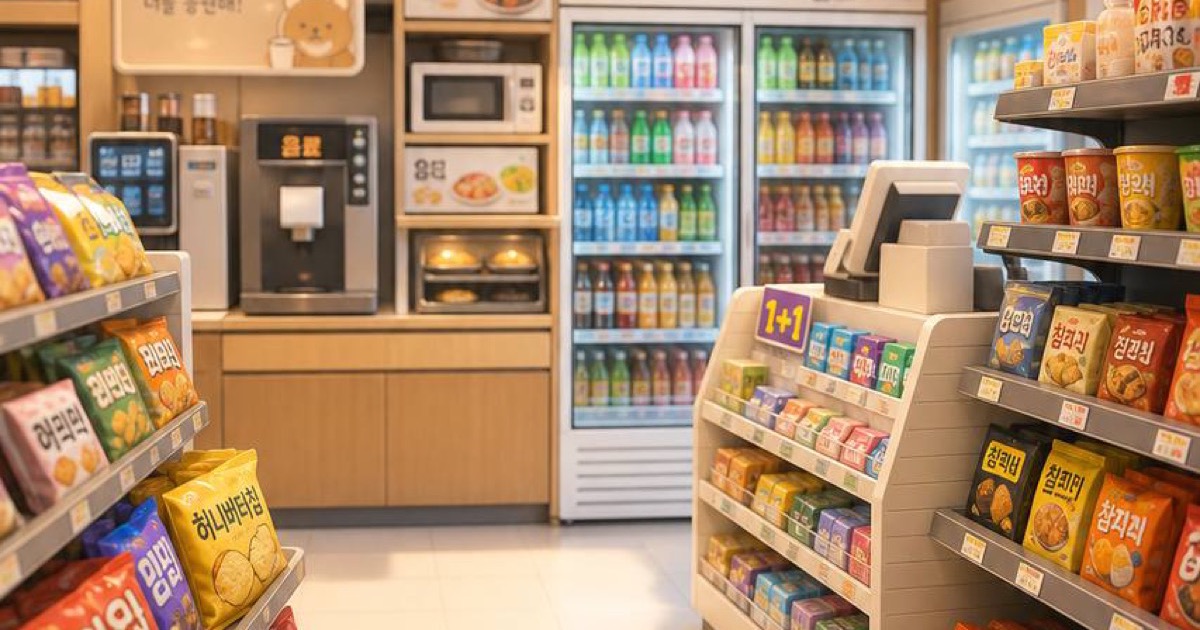
The convenience store is where most travelers have their first public drink in Korea. You buy a can inside, then step out to the tables. Some stores are happy for you to sit; others want the tables kept for people buying food, and a few have taken them away at night after noise complaints. A short exchange settles it:
You: 밖에서 마셔도 돼요? bak-ke-seo ma-syeo-do dwae-yo? Can I drink it outside?
Clerk: 네, 괜찮아요. 열두 시까지만요. ne, gwaen-cha-na-yo. yeol-du si-kka-ji-man-yo. Yes, that's fine. Only until midnight.
You: 감사합니다. 쓰레기는 어디에 버려요? gam-sa-ham-ni-da. sseu-re-gi-neun eo-di-e beo-ryeo-yo? Thank you. Where do I throw the trash?
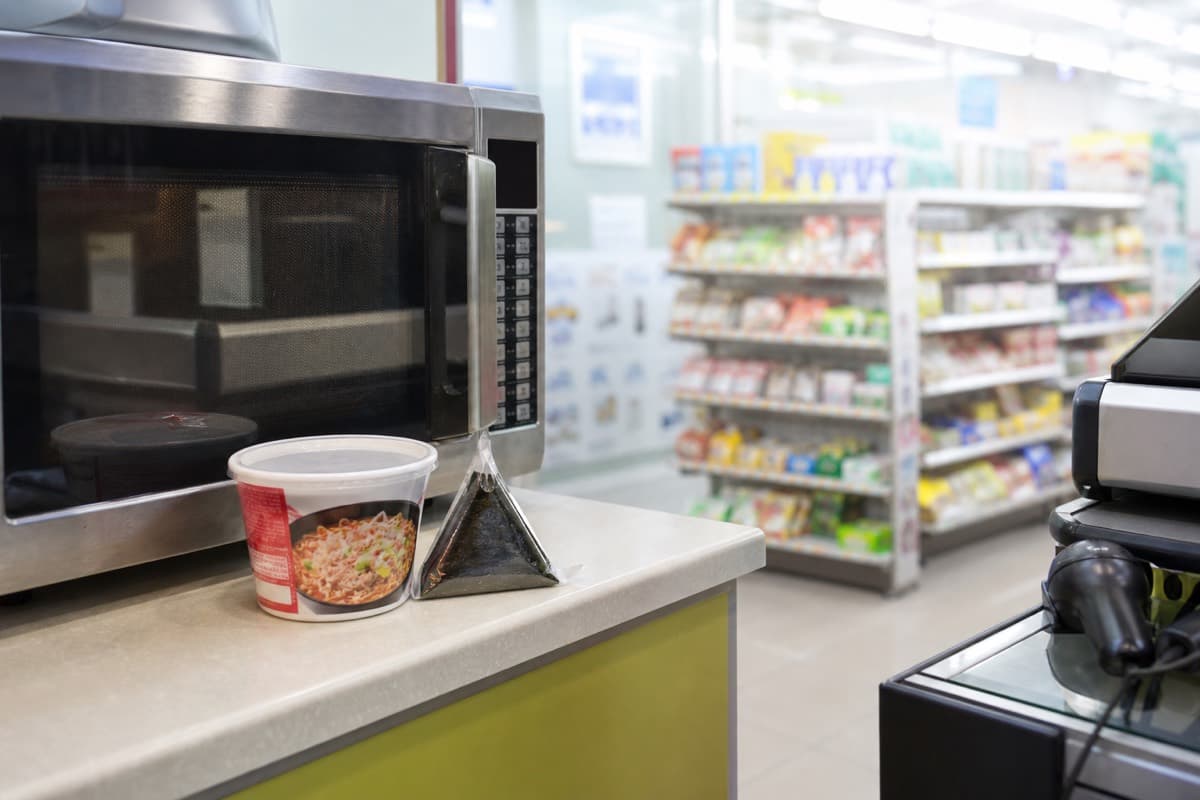
That last line matters more than it looks. Public trash cans are rare in Korean cities, and leaving cans on the table is the fastest way to lose a store's goodwill. If you're cooking instant noodles at the same counter, our guide to ramyeon at a Hangang convenience store walks through the machines and the menu.
Signs to read before you open a can
| Korean | Romanization | Meaning |
|---|---|---|
| 금주구역 | geum-ju-gu-yeok | No-drinking zone |
| 음주 금지 | eum-ju geum-ji | No drinking alcohol |
| 음료 반입 금지 | eum-nyo ba-nip geum-ji | No drinks inside |
| 음식물 반입 금지 | eum-sing-mul ba-nip geum-ji | No food or drink inside |
| 금연구역 | geu-myeon-gu-yeok | No-smoking zone |
Notice the shared piece: 금 (geum) means "forbidden." Once you spot it at the start of a word, or 금지 at the end of a phrase, you know the sign is telling you not to do something. 주 in 금주 is the same character as in 소주, which makes 금주구역 easy to remember.
Mistakes travelers make with this
Treating "legal" as "anywhere." No law against public drinking doesn't mean a subway car, a temple courtyard, or a playground is the place for it. Koreans drink outdoors a lot, but in spots everyone agrees are for that.
Drinking straight from a bottle while walking through a crowd. It isn't illegal, but in a packed street it reads as a little rough. Most people drink where they've stopped, then walk.
Saying 마셔요? instead of 마셔도 돼요? Without -도 돼요, you're asking "Do you drink?" rather than "May I drink?" Expect a confused smile, or an invitation to join them.
Forgetting ID. A clerk asking 신분증 보여 주세요 isn't being rude. Stores face heavy penalties for selling to minors, and a young-looking traveler gets asked often. If someone asks your age directly, how to ask age in Korean shows how that conversation goes.
For the wider picture of what Koreans notice and what they don't, see Korean etiquette for tourists.
Practice the question before your first can
Say 여기서 마셔도 돼요? out loud five times. The middle part, 마셔도, should flow as one smooth word, and the question lifts slightly on the last syllable, 돼요? Then swap the verb: 먹어도 돼요?, 앉아도 돼요?, 들고 가도 돼요? One pattern, four situations, and you'll never have to guess at a park entrance again.
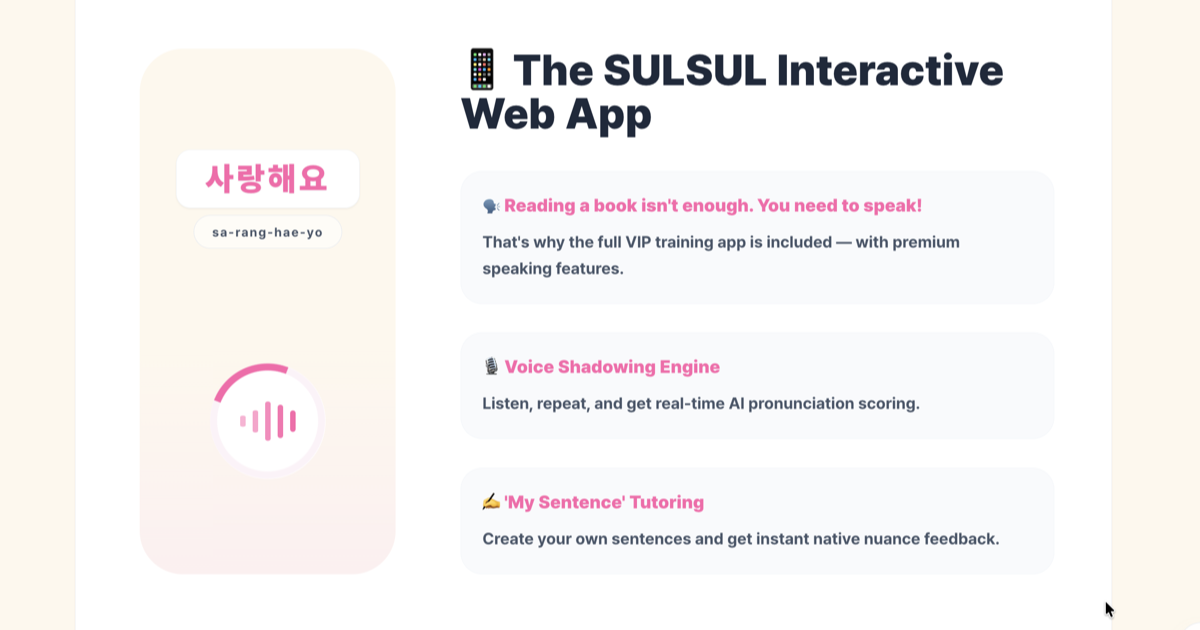
SULSUL is a speaking gym built for this: pick a pattern, say it out loud, get an instant fix from the AI pronunciation coach, then run the whole situation as a mission. The 100-pattern PDF workbook comes along as a bonus.
Now say it out loud
SULSUL says the phrase, you repeat it, and it tells you what came out wrong — 100 survival patterns for cafes, taxis and small talk in Seoul.
Start speaking Korean →