Can You Eat While Walking in Korea? Is It Rude?

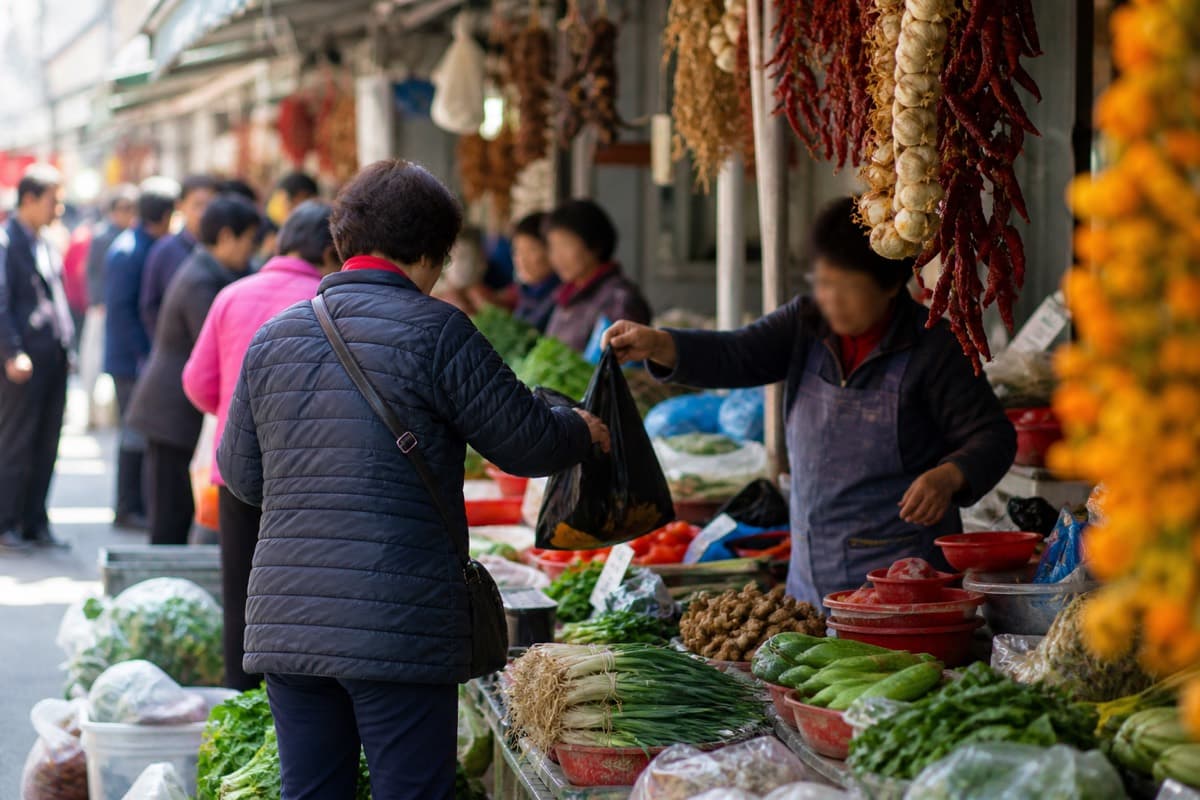
Eating while walking in Korea isn't illegal, and it isn't a serious taboo. You'll see plenty of people strolling with coffee, ice cream, or a paper cup of tteokbokki, especially in busy areas like Myeongdong and Hongdae. Still, many Koreans, particularly older ones, were raised to think that adults should sit or stand still to eat, so a full meal on the move can draw a look. The easy habit is to eat at the stall where you bought the food. When you're not sure, ask 여기서 먹어도 돼요? (yeogiseo meo-geo-do dwaeyo?), "Can I eat here?"
Eating on the go in Korea, the short version
- Coffee, ice cream, or a small snack in a busy area: normal
- Hot, saucy, or smelly food on a crowded sidewalk: finish it by the stall
- Shops, museums, and Seoul city buses: check first
- "Can I eat here?": 여기서 먹어도 돼요? — yeogiseo meo-geo-do dwaeyo?
- "Where's the trash can?": 쓰레기통 어디 있어요? — sseu-re-gi-tong eodi isseoyo?
What's fine, what gets looks, and what to skip
The reaction depends less on the act of eating than on where you are, what you're holding, and who's around you.
| Situation | How it usually lands | What to do |
|---|---|---|
| Iced coffee on a shopping street | Completely normal | Keep walking |
| Ice cream or a hotteok in Myeongdong | Normal for a tourist area | Mind the crowd and your sleeves |
| Tteokbokki or skewers in a crowd | Tolerated, but sauce is a hazard | Step to the side or stay by the stall |
| A big meal on a quiet residential street | Likely to draw a look | Find a bench |
| Temple grounds or hanok neighborhoods where people live | Feels out of place | Put it away until you leave |
| Walking into a shop with food | Often unwelcome | Finish first, or ask |
Age matters too. A college student in Hongdae won't look twice at you, while a grandmother at a neighborhood market might. Neither reaction means you've done anything terrible, so don't stress about one glance.
Practice this out loud with SULSUL — the app says it, you repeat it →
Why street food is usually eaten at the stall
At a Korean street stall, staying put is partly practical. The vendor hands you a paper cup, a skewer, or a small plate, and they're often the ones who take it back when you're done. At a 어묵 (eo-muk, fish cake) stall, customers commonly stand at the counter, eat from the skewer, sip the free 국물 (gung-mul, broth), and pay when they finish. Leaving with the skewer just gives you something to carry around.
Here's how that exchange often goes. The vendor's first line is the one to listen for:
Vendor: 드시고 가세요? You: 네, 여기서 먹고 갈게요. Vendor: 네, 여기요. 국물도 드세요. You: 감사합니다. 이 꼬치 어디에 버려요? Vendor: 여기 주세요.
드시고 가세요? (deu-si-go ga-se-yo?) means "Are you eating here?" 여기서 먹고 갈게요 (yeogiseo meok-go gal-ge-yo) means "I'll eat here before I go." If you'd rather take it with you, say 포장해 주세요 (po-jang-hae juseyo), "Please wrap it to go," which is Pattern 23 from the SULSUL workbook. For what to order in the first place, see Korean phrases for summer street food.
The one question that covers every situation
Pattern 44, (V)아/어도 돼요?, asks for permission. Swap in a verb and it works almost anywhere:
- 여기서 먹어도 돼요? (yeogiseo meo-geo-do dwaeyo?) — "Can I eat here?"
- 여기 앉아도 돼요? (yeogi an-ja-do dwaeyo?) — "Can I sit here?"
- 이거 들고 들어가도 돼요? (i-geo deul-go deu-reo-ga-do dwaeyo?) — "Can I bring this in?"
- 커피 들고 타도 돼요? (keo-pi deul-go ta-do dwaeyo?) — "Can I board with my coffee?"
If you want to ask about the walking itself, 걸으면서 먹어도 돼요? (geo-reu-myeon-seo meo-geo-do dwaeyo?) means "Is it okay to eat while walking?" The ending -(으)면서 joins two actions happening at once. It's a fun question for a Korean friend, who'll probably laugh and give you their own opinion.
The answer you may hear comes from the other half of the same pattern: 여기서 드시면 안 돼요 (yeogiseo deu-si-myeon an dwaeyo), "You can't eat here." It isn't harsh. Answer with a quick 아, 네. 죄송합니다, and move along.
Finding somewhere to stop, and somewhere to throw it away
Many first-time visitors run into the same problem: public trash cans can be surprisingly hard to find on Korean streets, so you may finish your snack and carry the empty cup for blocks. Your best bet is to hand it back where you bought it, or to ask nearby. Pattern 04 and Pattern 03 handle the questions:
- 쓰레기통 어디 있어요? (sseu-re-gi-tong eodi isseoyo?) — "Where's the trash can?"
- 앉아서 먹을 데 있어요? (an-ja-seo meo-geul de isseoyo?) — "Is there somewhere to sit and eat?"
- 휴지 있어요? (hyu-ji isseoyo?) — "Do you have a tissue?"
- 이거 버려 주시겠어요? (i-geo beo-ryeo ju-si-ge-sseo-yo?) — "Could you throw this away for me?"
Use that last one only with the person who sold you the item. Handing a stranger's shop your empty cup from somewhere else isn't polite. And don't assume a recycling bin outside a store is for you, since many belong to the shop. If you end up holding on to your trash, the guide to taking out the trash in Korea explains how sorting works, which is handy if you're staying in a rental.
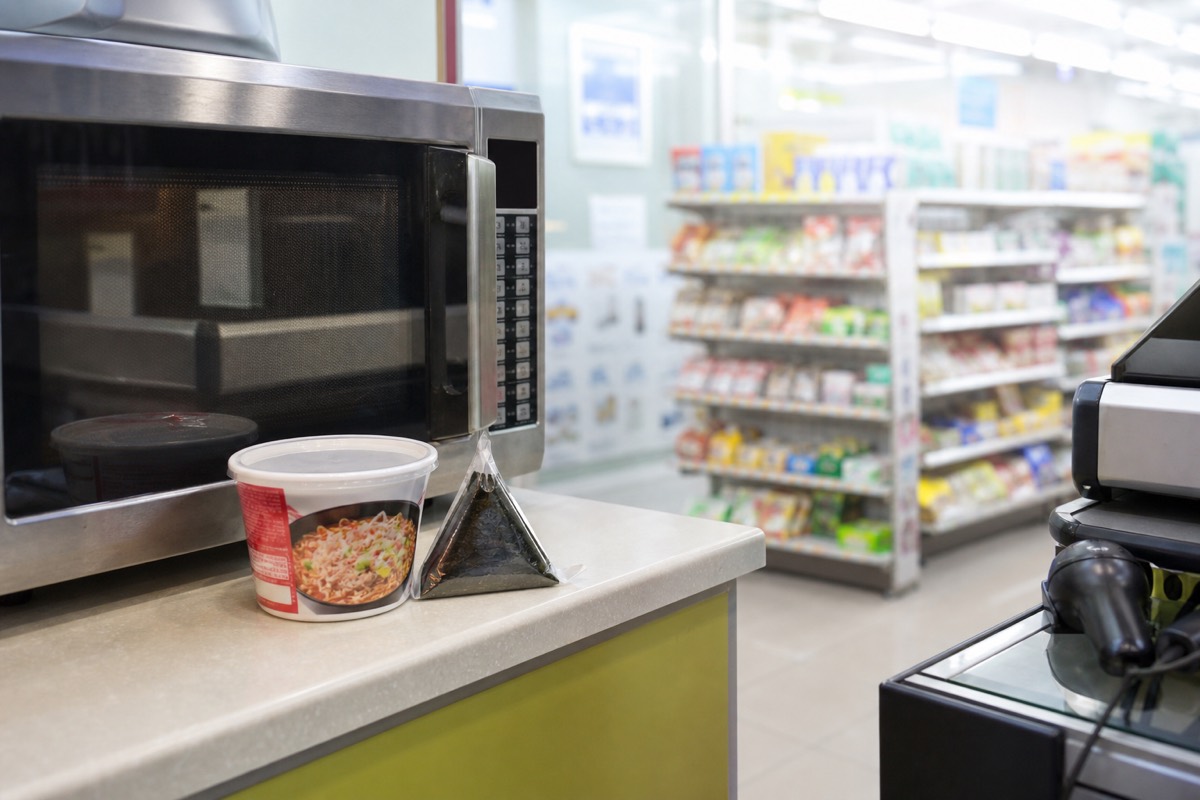
Convenience stores are the quiet rescue here. Many have a small table or a window counter, so you can sit down with a hot snack. Just check first, because some of those seats are meant for food bought in the store: 여기서 먹어도 돼요? works again.
Signs that mean "finish it outside"
You can't always count on someone stopping you, so it helps to recognize these on a door:
| Sign | Say it | Meaning |
|---|---|---|
| 음식물 반입 금지 | eum-sing-mul ba-nip geum-ji | No food or drink inside |
| 외부 음식 반입 금지 | oe-bu eum-sik ba-nip geum-ji | No outside food |
| 취식 금지 | chwi-sik geum-ji | No eating here |
The word to memorize is 금지 (geum-ji), "prohibited." You'll see it on signs all over Korea, so learning this one word pays off well beyond food. When you need to tell a staff member you'll comply, say 다 먹고 들어갈게요 (da meok-go deu-reo-gal-ge-yo), "I'll finish eating and then come in."
Buses and subways: the rule travelers miss
This is where the etiquette question turns into a practical one. Since 2018, Seoul's city bus rules have allowed drivers to refuse passengers carrying food or drinks in disposable cups, the kind of takeout cup you're probably holding right now. Seoul's guidelines list hot or iced drinks in disposable cups and cup-style snacks like tteokbokki. Sealed tumblers, unopened cans, and food packed only for carrying, such as boxed pizza, are generally allowed. Rules can vary by city and bus operator, so ask if you're unsure.
If a driver points at your cup, you've got two good lines. Pattern 37, (V)기 전에, gives you the first:
- 버스 타기 전에 다 마실게요. (beo-seu ta-gi jeo-ne da ma-sil-ge-yo) — "I'll finish it before I get on."
- 죄송합니다, 다음 버스 탈게요. (joe-song-ham-ni-da, da-eum beo-seu tal-ge-yo) — "Sorry, I'll take the next bus."
On the subway, it's mostly a matter of manners. A closed drink is unremarkable, but a hot, strong-smelling snack in a packed car isn't. The rest of your ride is covered in Korean phrases for riding the bus, and the broader habits are in Korean etiquette for tourists.
Mistakes travelers make with this
Assuming it works the way it does in Japan. Plenty of travel advice treats the two countries as the same. Korea is generally more relaxed about this, so you don't need to hide your hotteok in panic.
Leaving trash on a ledge or a wall. With so few bins, it's tempting. This annoys people far more than the eating does, so carry it until you find a bin.
Saying 먹어요? instead of 먹어도 돼요? 먹어요? only asks "Are you eating?" or "Do you eat it?" You need the -도 돼요 ending to ask for permission.
Rushing the pronunciation of 먹어도. The final ㄱ of 먹 slides onto the next syllable, so it sounds like meo-geo-do, not meok-eo-do.
Say it before the vendor asks
These lines are short, but street stalls move fast. The vendor says 드시고 가세요? without slowing down, someone's waiting behind you, and you've got a hot cup in one hand and your wallet in the other. Say 여기서 먹고 갈게요 and 쓰레기통 어디 있어요? out loud a few times, and they'll be there when you need them.
SULSUL is a speaking gym built for moments like that: pick a pattern, say it out loud, get an instant fix from the AI pronunciation coach, then run the real situation as a mission. The 100-pattern PDF workbook comes along as a bonus.
Now say it out loud
SULSUL says the phrase, you repeat it, and it tells you what came out wrong — 100 survival patterns for cafes, taxis and small talk in Seoul.
Start speaking Korean →