Korean Phrases for Taking Out the Trash in Korea

Nobody warns you that the hardest part of your first week in a Korean apartment is the garbage. You cannot use just any bag — you need a 종량제 봉투 (jongnyangje bongtu, volume-rate trash bag) sold for your own district, and the pile downstairs is sorted into more categories than you expected. Two patterns from the SULSUL workbook cover the whole thing. Pattern 01 — noun plus 주세요 (juseyo) — gets you the bag: 종량제 봉투 주세요 (jongnyangje bongtu juseyo), "A volume-rate trash bag, please." Pattern 44 — verb stem plus 아/어도 돼요? (a/eodo dwaeyo?) — keeps you out of trouble downstairs: 여기에 버려도 돼요? (yeogie beoryeodo dwaeyo?), "Is it okay to put it out here?"
- Buy the right bag: 종량제 봉투 주세요 (jongnyangje bongtu juseyo), "A volume-rate trash bag, please."
- Ask where something goes: 이거 어디에 버려요? (igeo eodie beoryeoyo?), "Where do I put this out?"
- Check before you leave it: 여기에 버려도 돼요? (yeogie beoryeodo dwaeyo?), "Is it okay to put it out here?"
- Ask which day: 재활용은 무슨 요일에 버려요? (jaehwaryongeun museun yoire beoryeoyo?), "What day does recycling go out?"
- Ask about food waste: 음식물 쓰레기는 어떻게 버려요? (eumsingmul sseuregineun eotteoke beoryeoyo?), "How do I put out food waste?"
Where do you buy the right trash bag?
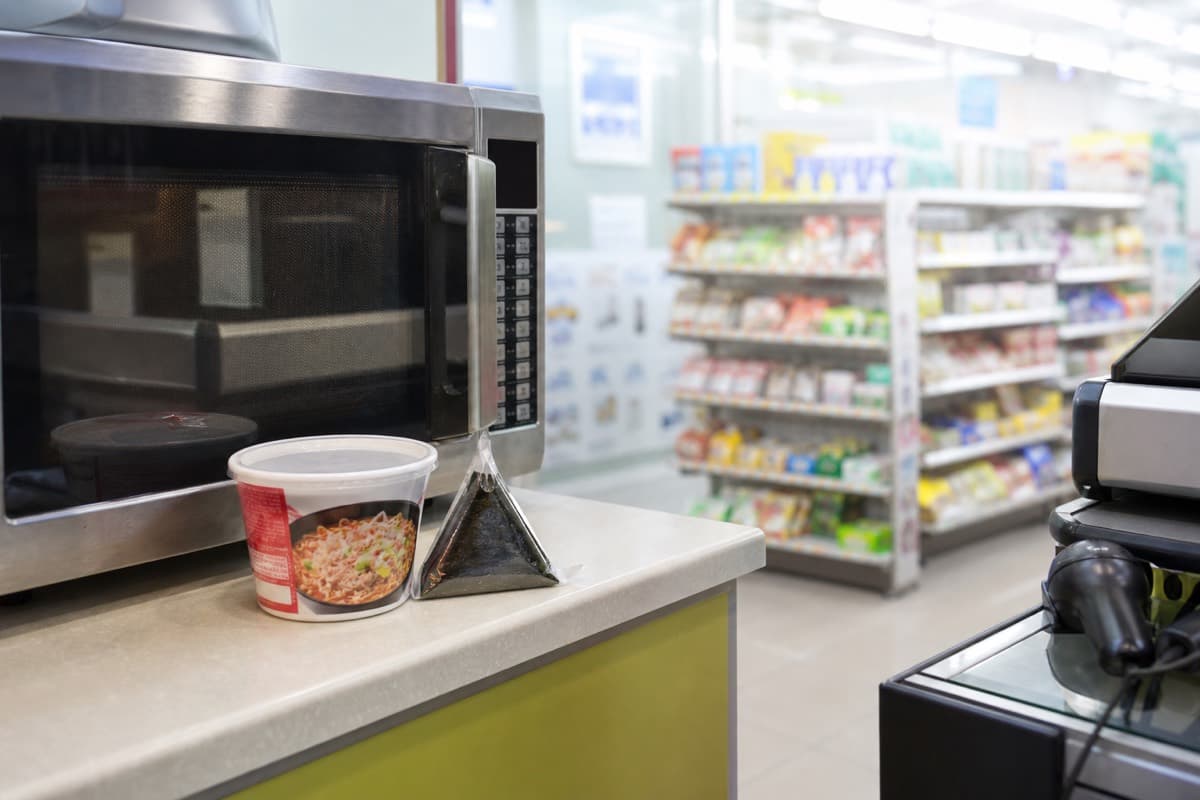
Every 편의점 (pyeonuijeom, convenience store) and supermarket sells them, but they are kept behind the counter, not on a shelf — so this one has to be asked for out loud. The bags come in different sizes, and the size is said in 리터 (riteo, litres).
You: 종량제 봉투 주세요. — jongnyangje bongtu juseyo. — "A volume-rate trash bag, please."
Them: 몇 리터요? — myeot riteoyo? — "What size?"
You: 20리터 주세요. — isip riteo juseyo. — "Twenty litres, please."
The bags are printed with the name of the district that sells them, and a bag from one district is not collected in another — so buy them near where you live, not near where you happen to be. If you are not sure the shop has them, Pattern 03 asks first: 종량제 봉투 있어요? (jongnyangje bongtu isseoyo?), "Do you have volume-rate bags?" A separate, smaller bag exists for kitchen scraps — 음식물 쓰레기 봉투 (eumsingmul sseuregi bongtu) — and asking for it by that full name is the fastest way to get the right one.
| Situation | Say this |
|---|---|
| Buy the right bag | 종량제 봉투 주세요 (jongnyangje bongtu juseyo) |
| Ask where something goes | 이거 어디에 버려요? (igeo eodie beoryeoyo?) |
| Check before you leave it | 여기에 버려도 돼요? (yeogie beoryeodo dwaeyo?) |
| Ask which day | 재활용은 무슨 요일에 버려요? (jaehwaryongeun museun yoire beoryeoyo?) |
| Ask about food waste | 음식물 쓰레기는 어떻게 버려요? (eumsingmul sseuregineun eotteoke beoryeoyo?) |
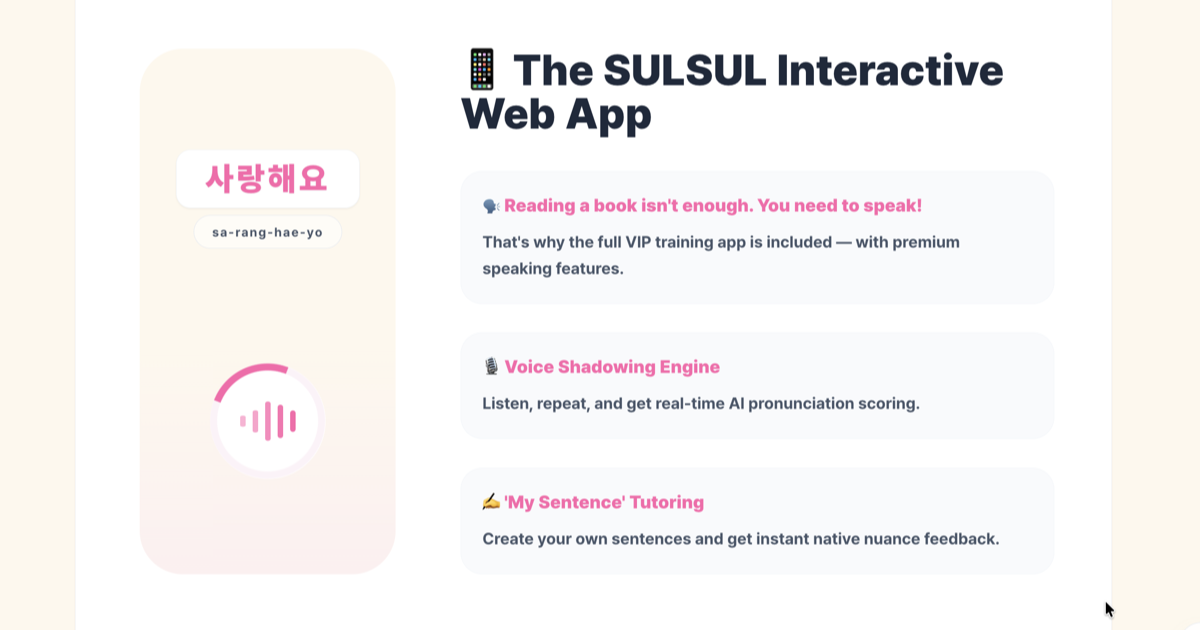
Practice this out loud with SULSUL — the app says it, you repeat it →
Which pile does each thing go in?
Korean buildings sort into three streams: 일반 쓰레기 (ilban sseuregi, general waste) in the paid bag, 재활용 (jaehwaryong, recycling) sorted into bins by material, and 음식물 쓰레기 (eumsingmul sseuregi, food waste) in its own container. The person to ask is whoever is standing nearest the bins — a neighbour, or the 경비 아저씨 (gyeongbi ajeossi, the building's caretaker).
You: 저기요, 이거 어디에 버려요? — jeogiyo, igeo eodie beoryeoyo? — "Excuse me, where do I put this out?"
Them: 그건 재활용이에요. 저쪽에 버리세요. — geugeon jaehwaryongieyo. jeojjoge beoriseyo. — "That's recycling. Put it over there."
You: 아, 감사합니다. — a, gamsahamnida. — "Ah, thank you."
The recycling area itself is the 분리수거장 (bullisugeojang), and 분리수거장 어디예요? (bullisugeojang eodiyeyo?) — Pattern 04 — finds it on your first day. Many buildings only open it on set days, which is what 재활용은 무슨 요일에 버려요? is for. If the answer comes back faster than you can follow, what to say when Korean is spoken too fast has the two sentences that slow it down, and how to politely ask for help in Korean covers opening the conversation in the first place.
What usually goes wrong with Korean trash rules?
The most common mistake is food waste. Rice, soup, and vegetable ends go in the food-waste container; bones, shells, egg shells, and tea bags do not — they are general waste. Getting that backwards is the one thing neighbours actually knock on your door about, so 음식물 쓰레기는 어떻게 버려요? is worth asking on day one rather than day thirty.
The second is furniture. A chair or a mattress cannot be put out with the bags at all — it is 대형폐기물 (daehyeong pyegimul, large waste), and it needs a 스티커 (seutikeo, sticker) arranged through your building office before collection. Trying to leave it downstairs without one means finding it still there a week later with a note attached. Ask the office directly: Korean phrases at the apartment management office in Korea has that conversation. And when you are buying the bags, the rest of the shop runs on the same patterns — see Korean phrases for shopping at a supermarket in Korea and Korean phrases for the convenience store.
Say it out loud, not just in your head
이거 어디에 버려요? is a five-word sentence that stops being easy the moment you are holding a dripping bag and somebody is watching you decide.
SULSUL is a speaking gym for exactly that moment: pick a survival pattern, say it out loud, get an instant fix from the AI pronunciation coach, then run the real situation as a mission. The 100-pattern PDF workbook comes along as a bonus.