Korean Phrases for the Immigration Office in Korea
The 출입국·외국인청 (churipguk oegugincheong, the immigration office) is the one counter in Korea where the stakes are not a wrong order or a missing parcel — it is your right to stay. The visit itself is short, the officer is fast, and everything hangs on two questions you have to be able to ask out loud. Two patterns from the SULSUL workbook cover both. Pattern 41 — -아/어야 해요 — is how you ask what is required rather than optional: 뭘 준비해야 해요? (mwol junbihaeya haeyo?), "What do I have to prepare?" Pattern 27 — -부터 -까지 — is how you pin down a window instead of guessing at it: 언제부터 언제까지 신청해야 해요? (eonjebuteo eonjekkaji sincheonghaeya haeyo?), "From when until when do I have to apply?"
- Say why you came: 체류기간 연장하러 왔어요 (cheryugigan yeonjanghareo wasseoyo), "I came to extend my stay."
- Ask what is required: 뭘 준비해야 해요? (mwol junbihaeya haeyo?), "What do I have to prepare?"
- Ask if you must return: 다시 와야 해요? (dasi waya haeyo?), "Do I have to come back?"
- Ask the application window: 언제부터 언제까지 신청해야 해요? (eonjebuteo eonjekkaji sincheonghaeya haeyo?), "From when until when do I have to apply?"
- Ask how long it takes: 접수부터 발급까지 얼마나 걸려요? (jeopsubuteo balgeupkkaji eolmana geollyeoyo?), "How long does it take from filing to issue?"

What do you say at the immigration counter?
Almost nothing at this office happens without a 방문예약 (bangmun yeyak), the visit reservation you book in advance on HiKorea — walk in without one and the answer at the door is usually 예약하셨어요? (yeyakhasyeosseoyo?), "Do you have a reservation?" Book it first, then arrive with your first sentence ready.
Them: 어떻게 오셨어요? — eotteoke osyeosseoyo? — "What brings you in?"
You: 체류기간 연장하러 왔어요. — cheryugigan yeonjanghareo wasseoyo. — "I came to extend my stay."
Them: 신청서 작성하셨어요? — sincheongseo jakseonghasyeosseoyo? — "Did you fill in the application form?"
You: 아직요. 뭘 준비해야 해요? — ajingnyo. mwol junbihaeya haeyo? — "Not yet. What do I have to prepare?"
신청서 (sincheongseo) is the application form, 체류자격 (cheryu jagyeok) is your status of stay, and 수수료 (susuryo) is the processing fee you pay on the spot. Pattern 41 is the shape that separates "you could" from "you must," and at this counter that difference is the whole visit: 직접 와야 해요? (jikjeop waya haeyo?), "Do I have to come in person?" or 여기에 서명해야 해요? (yeogie seomyeonghaeya haeyo?), "Do I have to sign here?" Take the verb stem, add -아야 해요 after ㅏ or ㅗ and -어야 해요 after anything else, with 하다 turning into 해야 해요 — and everyone around you will say -어야 돼요 (-eoya dwaeyo) instead, which means exactly the same thing.
| Situation | Say this |
|---|---|
| Say why you came | 체류기간 연장하러 왔어요 (cheryugigan yeonjanghareo wasseoyo) |
| Ask what is required | 뭘 준비해야 해요? (mwol junbihaeya haeyo?) |
| Ask if you must return | 다시 와야 해요? (dasi waya haeyo?) |
| Ask the application window | 언제부터 언제까지 신청해야 해요? (eonjebuteo eonjekkaji sincheonghaeya haeyo?) |
| Ask how long it takes | 접수부터 발급까지 얼마나 걸려요? (jeopsubuteo balgeupkkaji eolmana geollyeoyo?) |
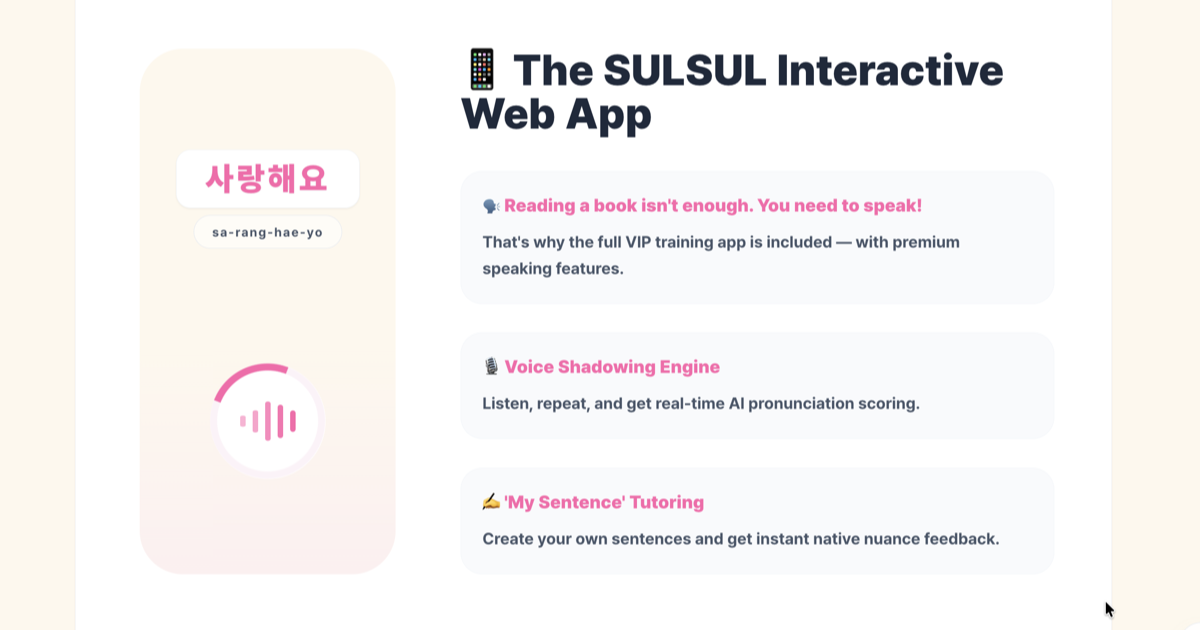
Practice this out loud with SULSUL — the app says it, you repeat it →
How do you ask about dates and deadlines?
Every answer here is a range, not a point. Your permission runs from one date to another, the application opens on one date and closes on another, and the card takes a stretch of days to arrive. Pattern 27 turns all three into one question shape: attach 부터 to the start and 까지 to the end.
You: 제 체류기간이 언제까지예요? — je cheryugigani eonjekkajiyeyo? — "Until when is my stay valid?"
Them: 만료일 전에 신청하셔야 해요. — mallyoil jeone sincheonghasyeoya haeyo. — "You have to apply before the expiry date."
You: 언제부터 신청할 수 있어요? — eonjebuteo sincheonghal su isseoyo? — "From when can I apply?"
Them: 만료 몇 달 전부터 가능해요. — mallyo myeot dal jeonbuteo ganeunghaeyo. — "It's possible from a few months before expiry."
만료일 (mallyoil) is the expiry date printed on your 외국인등록증 (oegugin deungnokjeung, residence card), and the sentence to keep in your pocket is 만료일 전에 신청해야 해요 (mallyoil jeone sincheonghaeya haeyo), "I have to apply before the expiry date." The same shape covers office hours — 몇 시부터 몇 시까지 해요? (myeot sibuteo myeot sikkaji haeyo?) — and the wait after filing: 접수부터 발급까지 얼마나 걸려요? The dates and window numbers come back in the Sino-Korean set, which is laid out in Korean numbers for paying and counting in Korea.
What usually goes wrong at the immigration office?
The first thing is the missing page. Branches ask for different supporting documents depending on your 체류자격, so the list you read online is a starting point, not the list — a 재직증명서 (jaejik jeungmyeongseo, proof of employment), a lease, a bank statement, a passport photo. Ask before you leave the house and again before you leave the counter: 또 뭐 필요해요? (tto mwo piryohaeyo?), "What else do I need?" Passport photos to the right size are a ten-minute errand at a photo studio — that conversation is Korean phrases at a photo studio in Korea — and the copies and scans are Korean phrases at a copy center in Korea.
The second is the reservation itself. Slots at busy offices go fast, and there are weeks when the calendar is simply empty, so book the moment you know your 만료일 rather than the week before it. If the appointment does not fit your work schedule, 다른 날짜 있어요? (dareun naljja isseoyo?), "Is there another date?" is a normal thing to ask, and so is 예약 변경해야 해요 (yeyak byeongyeonghaeya haeyo), "I have to change my reservation."
The third is the address. Moving house starts a short clock — you have to report the new one at the immigration office or the community service center within days of the move, not whenever you settle in, and the sentence is 체류지 변경 신고하러 왔어요 (cheryuji byeongyeong singohareo wasseoyo), "I came to report a change of address." The counter that handles the Korean side of it is in Korean phrases for the community service center in Korea, the move itself is Korean phrases for moving day in Korea, and the lease it all rests on comes from Korean phrases for talking to a real estate agent in Korea. When an officer answers faster than you can hold on to, what to say when Korean is too fast buys the sentence back, and how to politely ask for help in Korean gets someone to start over with you.
Say it out loud, not just in your head
뭘 준비해야 해요? is a sentence you cannot look up mid-sentence — your number is on the screen, the officer is already reaching for your passport, and there are forty people behind you.
SULSUL is a speaking gym for exactly that moment: pick a survival pattern, say it out loud, get an instant fix from the AI pronunciation coach, then run the real situation as a mission. The 100-pattern PDF workbook comes along as a bonus.