How to Say Thank You in Korean: 감사합니다 or 고마워요
To say thank you in Korean, say 감사합니다 (gamsahamnida) to anyone you do not know well — shop staff, a stranger who helped you, a taxi driver, someone older than you. To someone you are close to, say 고마워요 (gomawoyo), or 고마워 (gomawo) if you are the same age or they are younger. That is the whole decision, and 감사합니다 alone will carry you through an entire trip without ever sounding wrong. The part that confuses most learners is that 감사합니다 and 고맙습니다 (gomapseumnida) are equally polite — they are not two rungs on a ladder. They are two different words that landed on the same formal ending, and Koreans pick between them by feel, not by rank.
- Thank you (to anyone) — 감사합니다 (gamsahamnida)
- Thank you (same formality, warmer) — 고맙습니다 (gomapseumnida)
- Thanks (polite but closer) — 고마워요 (gomawoyo)
- Thanks (to friends) — 고마워 (gomawo)
- Thank you so much — 정말 감사합니다 (jeongmal gamsahamnida)
- You're welcome — 아니에요 (anieyo)
감사합니다, 고맙습니다, 고마워요 — which one and when
Start with the ending, because that is where the politeness actually lives. -습니다 / -합니다 is the formal polite ending. -어요 / -아요 is the everyday polite ending. -어 / -아 with nothing after it is 반말, casual speech. Gratitude follows the same ladder as every other Korean verb.
| Say this | To whom | Feel |
|---|---|---|
| 감사합니다 (gamsahamnida) | strangers, staff, elders, anyone | safe, correct everywhere |
| 고맙습니다 (gomapseumnida) | same as above | equally formal, a touch warmer |
| 고마워요 (gomawoyo) | a friendly coworker, a neighbour, someone slightly older you know | polite but close |
| 고마워 (gomawo) | friends, younger people, family | casual |
| 감사드립니다 (gamsadeurimnida) | emails, speeches, announcements | ceremonial |
Now the root difference, which is the real answer to "why are there two?" 감사 comes from Sino-Korean characters meaning gratitude, so 감사합니다 is literally "I do gratitude." 고맙다 is a native Korean word for being grateful, so 고맙습니다 is the home-grown version. Sino-Korean vocabulary carries a faintly official tone in Korean — the same way "gratitude" feels more formal than "thanks" in English even though both are polite. That is the entire gap between them. Use either one in a shop and nobody will blink.
One asymmetry worth knowing: 고마워요 is extremely common, but 감사해요 is not. It exists grammatically, yet it sounds slightly off to most ears, so when you want to step down from formal to friendly, step down the 고맙다 side of the family and say 고마워요.
Practice this out loud with SULSUL — the app says it, you repeat it →
How 감사합니다 is actually pronounced
The spelling lies a little. 합니다 is written with a ㅂ, but a ㅂ sitting in front of a ㄴ turns into ㅁ in speech. So 감사합니다 comes out as gam-sa-ham-ni-da, never gam-sa-hap-ni-da. The same rule is why 고맙습니다 lands as go-map-sseum-ni-da, with the 습 tightened.
Two more things that make it sound native rather than recited. The stress is flat — Korean does not punch one syllable the way English does, so resist the urge to hit GAM-sa. And in fast real speech the first syllable softens toward kam, which is why you will hear "kamsahamnida" in dramas. Aim for even, unhurried syllables and it reads as respectful.
The bow is part of the phrase
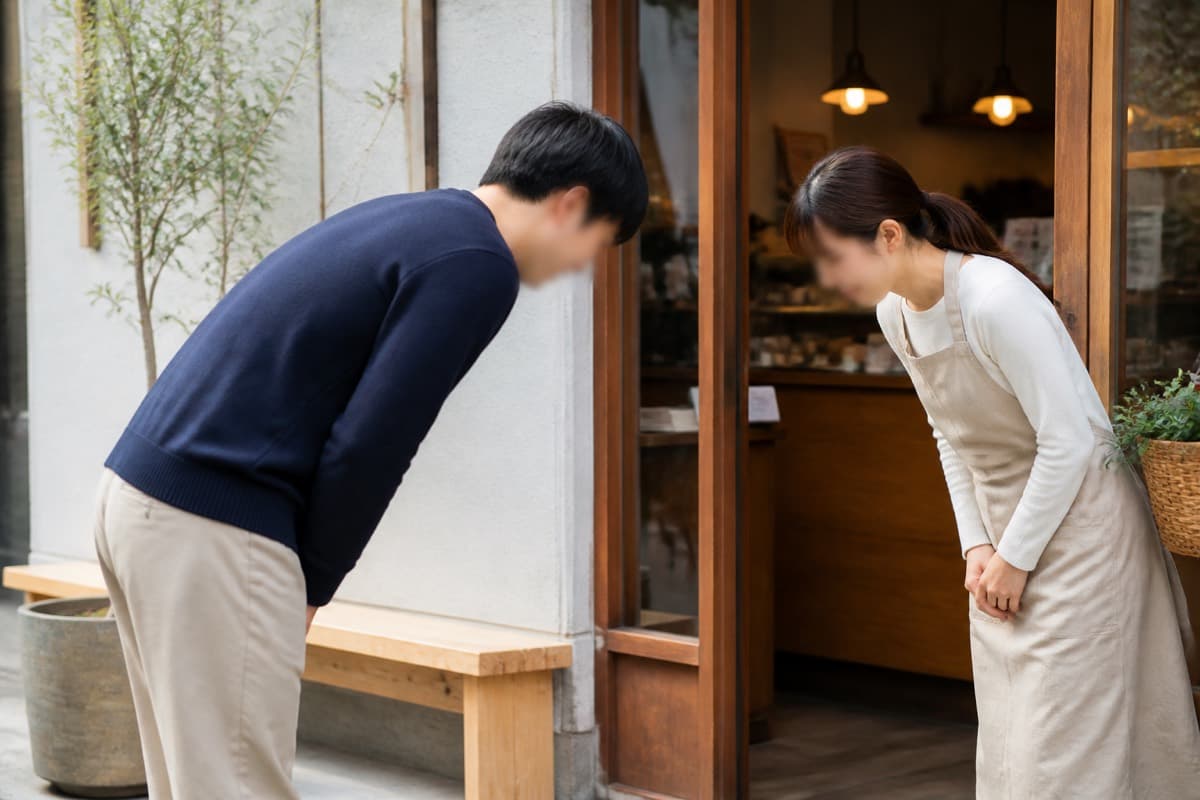
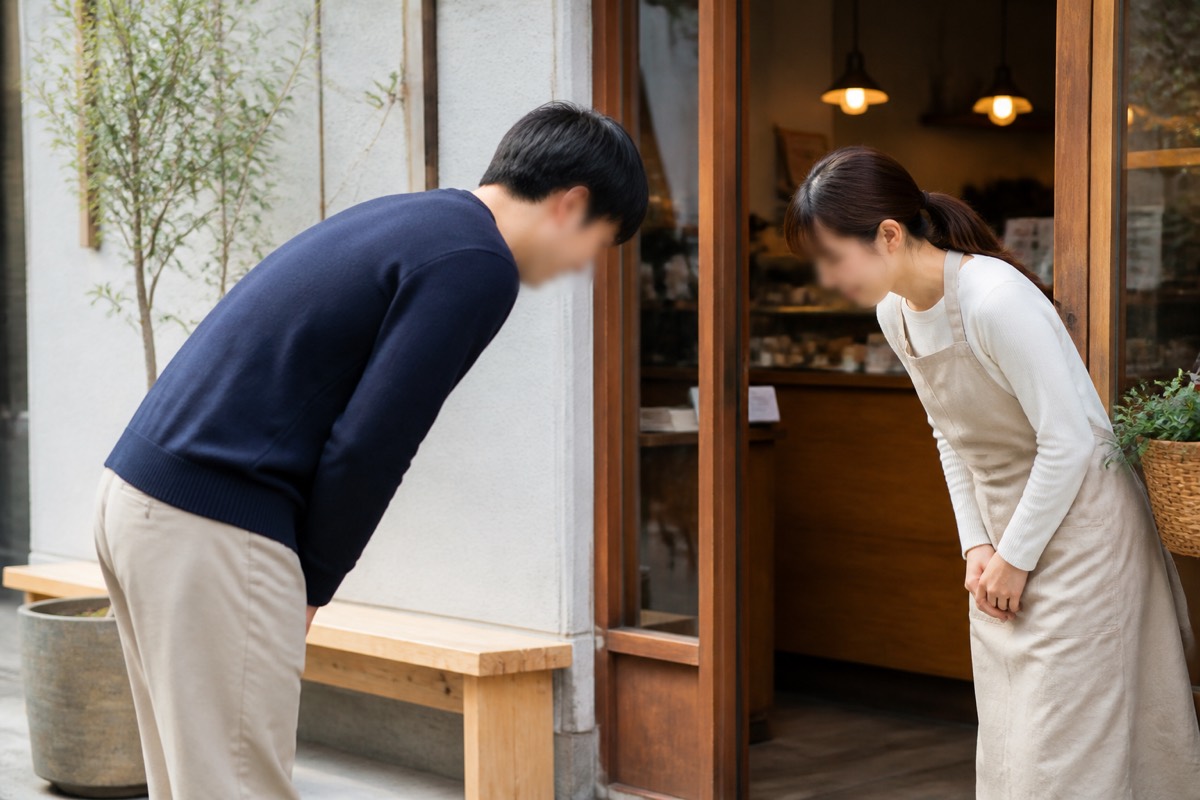
In Korea, gratitude comes out of the body as much as the mouth, and getting this wrong is more visible than a pronunciation slip. A quick nod of the head — chin down, back straight, about one second — is what goes with 감사합니다 to a cashier, a barista, or a stranger who pointed you to the right exit. Anything deeper looks theatrical in a convenience store.
For someone clearly older, a teacher, or a person who went out of their way for you, bend from the waist maybe fifteen to thirty degrees and hold it a beat longer. The deep ninety-degree bow you see in period dramas belongs to apologies, ceremonies, and idols thanking a stadium — not to daily life.
Two practical notes. If your hands are full, the nod alone is enough; nobody expects a performance. And when a shop worker says 감사합니다 to you on the way out, you are not obliged to match it — a nod, a 네~ (ne), or 수고하세요 (sugohaseyo, roughly "keep up the good work") is the normal exchange. This sits right next to the leaving phrases in how to say goodbye in Korean.
Thanking someone for something: 주셔서 감사합니다
Bare 감사합니다 is complete on its own, but naming what you are grateful for is what turns a reflex into a sentence. The frame is simple: take a verb, attach -아/어 주셔서, and finish with 감사합니다. The 주셔서 part means "because you did it for me," so the whole thing reads "thank you for doing that for me."
- 도와주셔서 감사합니다 — dowajusyeoseo gamsahamnida — "Thank you for helping me."
- 알려 주셔서 감사합니다 — allyeo jusyeoseo gamsahamnida — "Thank you for letting me know."
- 기다려 주셔서 감사합니다 — gidaryeo jusyeoseo gamsahamnida — "Thank you for waiting."
- 찍어 주셔서 감사합니다 — jjigeo jusyeoseo gamsahamnida — "Thank you for taking the photo."
- 와 주셔서 감사합니다 — wa jusyeoseo gamsahamnida — "Thank you for coming."
Among friends, the same frame relaxes to -아/어 줘서 고마워: 도와줘서 고마워 (dowajwoseo gomawo), "thanks for helping." Notice that 주셔서 drops to 줘서 — the honorific 시 disappears with it.
There is one more phrase that native speakers reach for constantly and textbooks rarely teach: 덕분에 (deokbune), "thanks to you." 덕분에 잘 찾았어요 (deokbune jal chajasseoyo) means "I found it easily thanks to you," and plain 덕분이에요 (deokbunieyo), "it's thanks to you," is a graceful thing to say when someone brushes off their own help. Use it for good outcomes only — it credits a person for something that went well.
You: 도와주셔서 감사합니다. — dowajusyeoseo gamsahamnida. — "Thank you for helping me." Them: 아니에요, 별말씀을요. — anieyo, byeolmalsseumeuryo. — "Not at all, don't mention it." You: 덕분에 잘 찾았어요. — deokbune jal chajasseoyo. — "I found it easily thanks to you."
What to say back: 아니에요, not 천만에요
When someone thanks you, the everyday reply is 아니에요 (anieyo) — literally "it's not," in the sense of "it was nothing." It is Pattern 18 in the SULSUL workbook, the 맞아요 / 아니에요 pair that also handles agreeing, declining, and waving off a compliment. Stretch the vowel a little and warm it up: 아니에요~.
| Reply | Romanization | Use it when |
|---|---|---|
| 아니에요 | anieyo | the default "you're welcome" |
| 아닙니다 | animnida | same thing, formal register |
| 괜찮아요 | gwaenchanayo | "it's fine, no trouble" |
| 별말씀을요 | byeolmalsseumeuryo | "don't mention it," polite and gracious |
| 네~ | ne | a nod plus this is what most people actually do |
And the one to retire: 천만에요 (cheonmaneyo). Nearly every phrasebook lists it as "you're welcome," and almost nobody says it out loud. Using it is not an error, but it marks you instantly as someone reciting a book. Say 아니에요 instead.
Where you will actually need it in a day
Gratitude is the highest-frequency phrase in a traveller's day, and it clusters in predictable places: the moment change lands in your hand, the moment a stranger points at the right exit, the moment a stranger hands your phone back after taking your photo, the moment food arrives at the table.
- Paying and getting change back — 감사합니다 as you take the card or the bag
- After someone gives directions — 감사합니다 with a nod, then walk
- After a meal, to the staff — 잘 먹었습니다 (jal meogeosseumnida), "I ate well," covered in what to say in Korean before and after eating
- When someone speaks slowly on purpose for you — 천천히 말해 주셔서 감사합니다
- When a stranger goes out of their way — 정말 감사합니다 with a slightly deeper bow
If the help came after you asked for it, the asking half is in how to politely ask for help in Korean, and the 주세요 frame that most requests are built on is in how to say please give me in Korean.
What usually goes wrong
Saying 감사 by itself. Clipping the ending off leaves you with a bare noun. It reads as curt in person even though people type it casually online. Keep the whole word.
Adding 요 to 감사합니다. 감사합니다요 is not more polite, it is ungrammatical. -습니다 is already the formal ending; nothing stacks on top of it.
Using 감사합니다 with close friends, every time. It is never rude, but repeated at a friend's dinner table it lands like saying "I am much obliged" to your roommate. Switch to 고마워.
Saying 수고하세요 to someone senior. It means "keep working hard," which is fine downward or sideways to staff, and awkward upward to a boss or an elder — you would be assessing their effort. To someone senior, 감사합니다 is the safe close.
Reaching for 천만에요. Textbook-correct, conversationally dead. 아니에요 is the living reply.
Skipping the nod. A perfectly pronounced 감사합니다 delivered with a motionless head feels strangely cold. The small bow is not decoration — it is half the phrase.
Dropping the 시 in 주셔서. 도와줘서 감사합니다 mixes casual and formal in one breath. Either 도와주셔서 감사합니다 or 도와줘서 고마워 — pick a lane and keep it.
Say it out loud, not just in your head
감사합니다 is five syllables you already understand, and it still comes out as a mumble the first few times, usually while a cashier is holding your change and waiting.
SULSUL is a speaking gym for exactly that moment: pick a survival pattern, say it out loud, get an instant fix from the AI pronunciation coach, then run the real exchange — the thank you, the nod, the reply — as a mission until it comes out clean. The 100-pattern PDF workbook comes along as a bonus.