Korean Phrases at an Emergency Room in Korea
The 응급실 (eunggeupsil), the emergency room, is the one place in Korea where nobody will wait while you look up a word. A nurse meets you at the door with 어떻게 오셨어요? (eotteoke osyeosseoyo?), "What brings you in?", and the next thirty seconds decide how quickly you are seen. Two patterns from the SULSUL workbook carry that answer. Pattern 86 — -는 바람에 — is how you say the thing that went wrong: 넘어지는 바람에 발목을 다쳤어요 (neomeojineun barame balmogeul dachyeosseoyo), "I fell and hurt my ankle." Pattern 27 — 부터 … 까지 — is how you give the span of time, which is the second thing every nurse asks: 어젯밤부터 지금까지 열이 안 내려요 (eojetbambuteo jigeumkkaji yeori an naeryeoyo), "The fever hasn't come down since last night."
- Say what happened: 넘어지는 바람에 다쳤어요 (neomeojineun barame dachyeosseoyo), "I fell and got hurt."
- Say since when: 어젯밤부터 아팠어요 (eojetbambuteo apasseoyo), "It's hurt since last night."
- Point at it: 여기가 제일 아파요 (yeogiga jeil apayo), "This is where it hurts most."
- Say what you can't do: 숨쉬기 힘들어요 (sumswigi himdeureoyo), "I'm having trouble breathing."
- Ask the wait: 얼마나 기다려야 해요? (eolmana gidaryeoya haeyo?), "How long do I have to wait?"

How do you say what happened?
어떻게 오셨어요? is not a polite greeting, it is the triage question, and the answer that gets you through it fastest is one cause and one result. That is exactly what Pattern 86 does: verb stem plus -는 바람에, then the thing it caused.
Them: 어떻게 오셨어요? — eotteoke osyeosseoyo? — "What brings you in?"
You: 계단에서 넘어지는 바람에 발목을 다쳤어요. — gyedaneseo neomeojineun barame balmogeul dachyeosseoyo. — "I fell on the stairs and hurt my ankle."
Them: 걸을 수 있으세요? — georeul su isseuseyo? — "Can you walk?"
You: 거의 못 걸어요. 많이 부었어요. — geoui mot georeoyo. mani bueosseoyo. — "Barely. It's very swollen."
The form never changes — -는 바람에 goes on any verb stem regardless of the batchim, so 넘어지다 becomes 넘어지는 바람에, 먹다 becomes 먹는 바람에. What does change is the meaning it carries: this pattern is only for results you did not want. 상한 걸 먹는 바람에 계속 토해요 (sanghan geol meongneun barame gyesok tohaeyo), "I ate something off and I keep throwing up," is natural. The same pattern on a good outcome sounds wrong to a Korean ear — for those you need 덕분에 (deokbune), "thanks to." In an emergency room that limitation is a feature, because everything you have to report is something that went wrong.
| Situation | Say this |
|---|---|
| You fell | 넘어지는 바람에 다쳤어요 (neomeojineun barame dachyeosseoyo) |
| Something broke or slipped | 미끄러지는 바람에 다쳤어요 (mikkeureojineun barame dachyeosseoyo) |
| Bad food | 상한 걸 먹는 바람에 토했어요 (sanghan geol meongneun barame tohaesseoyo) |
| You can't breathe well | 숨쉬기 힘들어요 (sumswigi himdeureoyo) |
| You're bleeding | 피가 계속 나요 (piga gyesok nayo) |
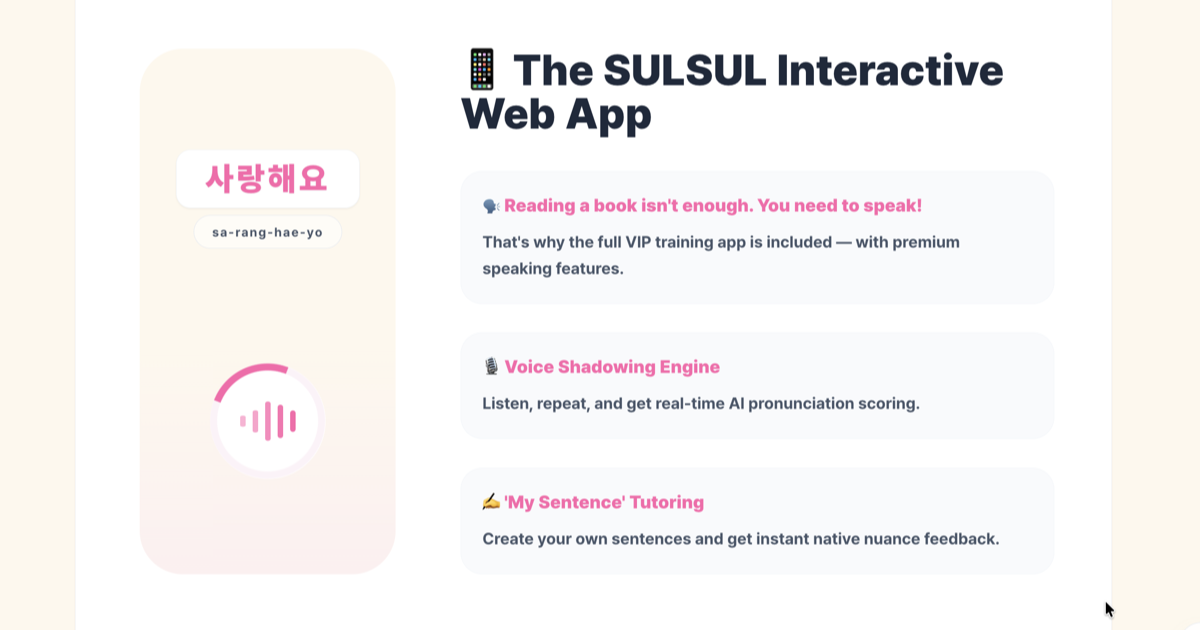
Practice this out loud with SULSUL — the app says it, you repeat it →
How do you answer "since when"?
The second question is always 언제부터 아프셨어요? (eonjebuteo apeusyeosseoyo?), "Since when has it hurt?" — and it is asked because the answer changes the treatment. Pattern 27 is two particles doing one job: 부터 marks the start, 까지 marks the end, and either one can stand alone. 어제부터 아팠어요 gives the start. 어제부터 오늘까지 아무것도 못 먹었어요 (eojebuteo oneulkkaji amugeotdo mot meogeosseoyo), "I haven't been able to eat anything since yesterday," gives both.
Them: 언제부터 아프셨어요? — eonjebuteo apeusyeosseoyo? — "Since when has it hurt?"
You: 어젯밤부터요. 열이 안 내려요. — eojetbambuteoyo. yeori an naeryeoyo. — "Since last night. The fever won't come down."
Them: 약은 드셨어요? — yageun deusyeosseoyo? — "Have you taken anything for it?"
You: 아침에 해열제 먹었는데 두 시간밖에 안 갔어요. — achime haeyeolje meogeonneunde du siganbakke an gasseoyo. — "I took a fever reducer this morning, but it only lasted two hours."
부터 is a stretch of time; 에 is a point on the clock. 세 시에 아팠어요 means it hurt at three o'clock and says nothing about now, while 세 시부터 아팠어요 means it started at three and has not stopped — a different sentence for a doctor. The same two particles do places as well, which is why 여기부터 여기까지 아파요 (yeogibuteo yeogikkaji apayo), "It hurts from here to here," works when you run a finger along your own side and the word for the body part will not come. Two more you will be asked: 알레르기 있으세요? (allereugi isseuseyo?), "Any allergies?" and 지금 드시는 약 있으세요? (jigeum deusineun yak isseuseyo?), "Are you on any medication?" Both are safest answered from a note on your phone rather than from memory, and the phrases for slowing the whole exchange down are in Korean phrases for when Korean is too fast.
What usually goes wrong at a Korean emergency room?
The first thing is choosing the wrong door. Korean emergency rooms sort everyone on arrival into five urgency levels, and a sprained ankle sits behind every chest pain that walks in after you — a wait of several hours is normal, not a mistake. For anything that can hold until morning, the better answer is a clinic with 야간진료 (yaganjillyo), evening hours, and for a child there is the 달빛어린이병원 (dalbit eorini byeongwon) network that stays open late specifically for kids. Not every hospital runs a full emergency department either, so 응급실 있어요? (eunggeupsil isseoyo?) is worth asking before you set off. If it is serious, 119 is the ambulance number and the operator can bring an interpreter onto the line; if you are going under your own steam, how to ask for a taxi in Korean is the faster read.
The second is the paperwork at 접수 (jeopsu), reception. Bring your 외국인등록증 (oegugin deungnokjeung), the residence card, and your health insurance details — national coverage is handled through the local office covered in Korean phrases for a community service center in Korea. An emergency room visit carries an extra emergency-care charge that a daytime clinic does not, and it is not waived just because the case turns out to be minor. The sentence to say before you leave is 진단서 받을 수 있어요? (jindanseo badeul su isseoyo?), "Can I get a medical certificate?" — a 진단서 (jindanseo) is what travel insurance, a school, or an employer will ask for later, and going back for one another day is its own errand.
The third is what happens after. You leave with a 처방전 (cheobangjeon), a prescription, which is filled at a pharmacy rather than the hospital, and at two in the morning that means a 심야약국 (simyayakguk), a late-night pharmacy — the counter language is in Korean phrases for a pharmacy in Korea. An emergency room stabilises you and then hands you back: 내일 병원 다시 가야 해요? (naeil byeongwon dasi gaya haeyo?), "Do I need to come back tomorrow?" is the question that tells you whether the next stop is a regular clinic, and how to see a doctor in Korea when you feel sick covers that morning.
Say it out loud, not just in your head
넘어지는 바람에 발목을 다쳤어요 has to arrive in one piece, at a counter, while someone is already writing.
SULSUL is a speaking gym for exactly that moment: pick a survival pattern, say it out loud, get an instant fix from the AI pronunciation coach, then run the real situation as a mission. The 100-pattern PDF workbook comes along as a bonus.