Korean Phrases for Going to a Wedding in Korea

The first Korean wedding you are invited to arrives as a 청첩장 (cheongcheopjang, invitation) in a KakaoTalk message rather than an envelope, and it catches most people out twice: once because the ceremony itself is shorter than the journey there, and once at the door, where there is a desk, a queue and an envelope in everyone's hand but yours. Two patterns from the SULSUL workbook are what get you through it. Pattern 14 — -아/어 봤어요 / -ㄴ/은 적이 있어요 — is how you say what you have and have not done, which is the honest opening move here: 한국 결혼식에 가 본 적이 없어요 (hanguk gyeolhonsige ga bon jeogi eopseoyo), "I've never been to a Korean wedding." Pattern 91 — 잘됐어요 / 수고하셨어요 / 힘내세요 — is the congratulating half, and it starts weeks before the day: 와, 진짜 잘됐네요! 축하해요 (wa, jinjja jaldwaenneyo! chukhahaeyo), "Wow, that's really great! Congratulations."
- Say it is your first: 한국 결혼식에 가 본 적이 없어요 (hanguk gyeolhonsige ga bon jeogi eopseoyo), "I've never been to a Korean wedding."
- React to the news: 정말 잘됐네요 (jeongmal jaldwaenneyo), "That's really great."
- Congratulate the couple: 결혼 축하드려요 (gyeolhon chukhadeuryeoyo), "Congratulations on your marriage."
- Ask where the envelope goes: 축의금 어디에 내요? (chuguigeum eodie naeyo?), "Where do I hand in the gift money?"
- Thank whoever ran the day: 오늘 수고 많으셨어요 (oneul sugo maneusyeosseoyo), "You worked so hard today."

How do you say this is your first Korean wedding?
Saying so out loud is the single most useful thing you can do, because the whole event runs on steps nobody explains — the desk, the envelope, the meal ticket, the photo — and any Korean guest standing near you will walk you through all four the moment they know you need it. Pattern 14 is how you say it without it sounding like an apology.
You: 저 한국 결혼식에 가 본 적이 없어요. 어떻게 해요? — jeo hanguk gyeolhonsige ga bon jeogi eopseoyo. eotteoke haeyo? — "I've never been to a Korean wedding. What do I do?"
Them: 먼저 접수대에서 봉투 내시면 돼요. — meonjeo jeopsudaeeseo bongtu naesimyeon dwaeyo. — "First just hand your envelope in at the reception desk."
You: 축의금 봉투 여기에 내요? — chuguigeum bongtu yeogie naeyo? — "Do I hand the gift money envelope in here?"
Them: 네, 이름 쓰시고 여기 주세요. 식권 드릴게요. — ne, ireum sseusigo yeogi juseyo. sikgwon deurilgeyo. — "Yes, write your name and give it to me here. I'll give you a meal ticket."
There are two ways to say you have or have not done something, and they sit slightly differently. -아/어 봤어요 is the lighter one, built by joining 아/어 to the stem by the usual vowel rules and adding 봤어요: 가 봤어요 (I've been), 먹어 봤어요 (I've tried it), 입어 봤어요 (I've worn it). -ㄴ/은 적이 있어요 states it as a flat past fact — -ㄴ 적이 있어요 with no batchim, -은 적이 있어요 with one: 간 적이 있어요, 먹은 적이 있어요. Swap 있어요 for 없어요 and you have the sentence you actually need on the day. It is also the question you will be asked all afternoon by people making conversation with you — 한복 입어 본 적 있어요? (hanbok ibeo bon jeok isseoyo?), "Have you ever worn hanbok?" — so having both halves ready is worth more than one perfect sentence.
| Situation | Say this |
|---|---|
| Say it is your first | 한국 결혼식에 가 본 적이 없어요 (hanguk gyeolhonsige ga bon jeogi eopseoyo) |
| React to the news | 정말 잘됐네요 (jeongmal jaldwaenneyo) |
| Congratulate the couple | 결혼 축하드려요 (gyeolhon chukhadeuryeoyo) |
| Ask where the envelope goes | 축의금 어디에 내요? (chuguigeum eodie naeyo?) |
| Thank whoever ran the day | 오늘 수고 많으셨어요 (oneul sugo maneusyeosseoyo) |
Practice this out loud with SULSUL — the app says it, you repeat it →
What do you say to the couple, and to everyone else?
The congratulating starts long before the day. Someone tells you at lunch that they are getting married, and the reaction Korean expects in that half-second is not a considered sentence — it is 잘됐네요, said fast and loudly, the way you would react to your own good news.
Them: 저 다음 달에 결혼해요. — jeo daeum dare gyeolhonhaeyo. — "I'm getting married next month."
You: 와, 진짜 잘됐네요! 축하해요. — wa, jinjja jaldwaenneyo! chukhahaeyo. — "Wow, that's really great! Congratulations."
Them: 고마워요. 꼭 와 주세요. — gomawoyo. kkok wa juseyo. — "Thank you. Please do come."
You: 그럼요, 꼭 갈게요. — geureomyo, kkok galgeyo. — "Of course, I'll definitely be there."
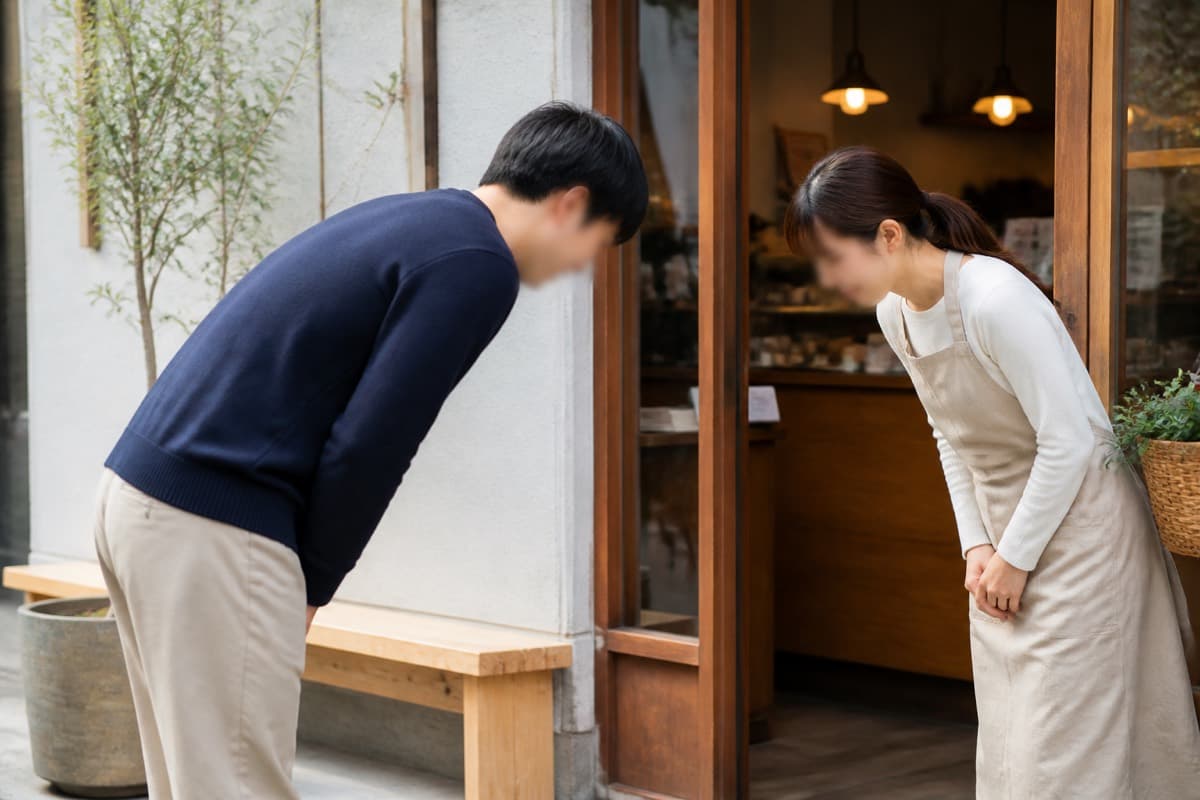
On the day itself the three chunks split by who is standing in front of you. To the couple, 결혼 축하드려요 — 축하드려요 rather than 축하해요, because 드리다 is the humble form of "to give" and you are handing the congratulations upwards. To the parents at the door, who have been bowing to arriving guests for an hour, 축하드립니다 (chukhadeurimnida) is the safe and correct thing to say. To the friend who has been sitting at the reception desk writing down names all afternoon, 오늘 수고 많으셨어요 is exactly right. The one trap worth knowing is that 수고하셨어요 points slightly downwards — it acknowledges someone's labour — so it goes to peers and to people working the event, and never to a boss or an elder, where 고생 많으셨습니다 (gosaeng maneusyeotseumnida) is the form that will not land wrong.
What usually goes wrong at a Korean wedding?
The first thing is the envelope. 축의금 (chuguigeum) is cash in a white envelope with your name written down the back, handed in at the 접수대 (jeopsudae, reception desk) before you go in, and what comes back is a 식권 (sikgwon), the ticket for the meal. There is no registry and no wrapped gift. How much goes in depends on how close you are and whether you are eating, and the one reliable way to get it right is to ask a Korean colleague going to the same wedding what they are putting in — nobody finds that question strange. Bring it in cash and bring it in a clean envelope; the counting words for the notes are in Korean numbers for paying and counting in Korea, and the cash machine on the way is Korean phrases at an ATM in Korea.
The second is the shape of the day. A wedding hall runs slots, so the 본식 (bonsik), the ceremony proper, often lasts about half an hour and the next couple's guests are already queueing outside. Before it starts, the bride sits in the 신부대기실 (sinbudaegisil, bride's waiting room), where guests go in for a few words and a photo — that is the moment to say 결혼 축하드려요, and 사진 같이 찍어도 돼요? (sajin gati jjigeodo dwaeyo?), "Can we take a photo together?" is the normal request, though the full toolkit is in how to ask someone to take a photo in Korean. Afterwards comes the group photo, then the buffet downstairs, and then people leave — a guest eating and going within two hours is ordinary, not rude. Some families also hold the 폐백 (pyebaek), a small traditional rite in hanbok for relatives only, and not being invited into it means nothing at all.
The third is what to wear. 하객룩 (hagaengnuk), the guest look, is a real category with one firm rule: white and anything close to it belongs to the bride, so leave it at home. Otherwise it is ordinary smart clothing, muted rather than bright, and a jacket if you own one — the shops for it and the words to try things on are in how to buy clothes in Korea. One more thing to expect: a wedding is where you run into people you have not seen in years, and 오랜만이에요 (oraenmanieyo), "it's been a long time," plus 보고 싶었어요 (bogo sipeosseoyo), "I've missed you," will do more work than any other sentence you say that day. If those conversations run away from you at speed, what to say when Korean is too fast slows them back down, and the titles for everyone's relatives are in Korean family titles and how to address people.
Say it out loud, not just in your head
축의금 어디에 내요? is a sentence you cannot look up mid-sentence — there is a queue behind you, the desk is waiting, and your envelope is already in your hand.
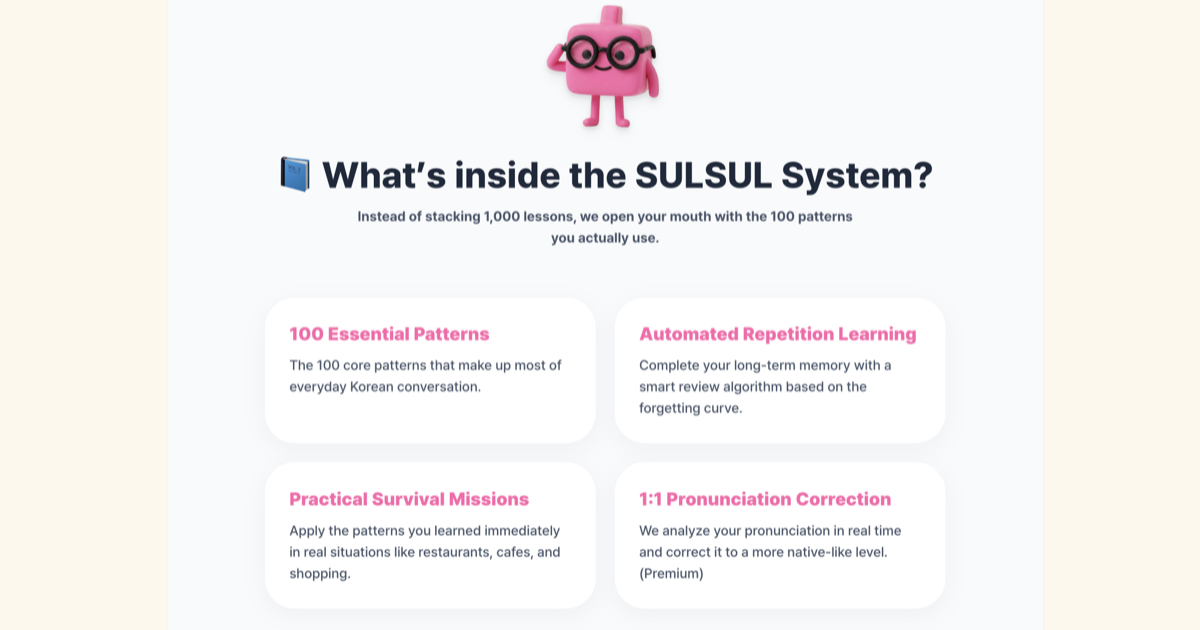
SULSUL is a speaking gym for exactly that moment: pick a survival pattern, say it out loud, get an instant fix from the AI pronunciation coach, then run the real situation as a mission. The 100-pattern PDF workbook comes along as a bonus.