Korean Phrases for a Housewarming Party in Korea
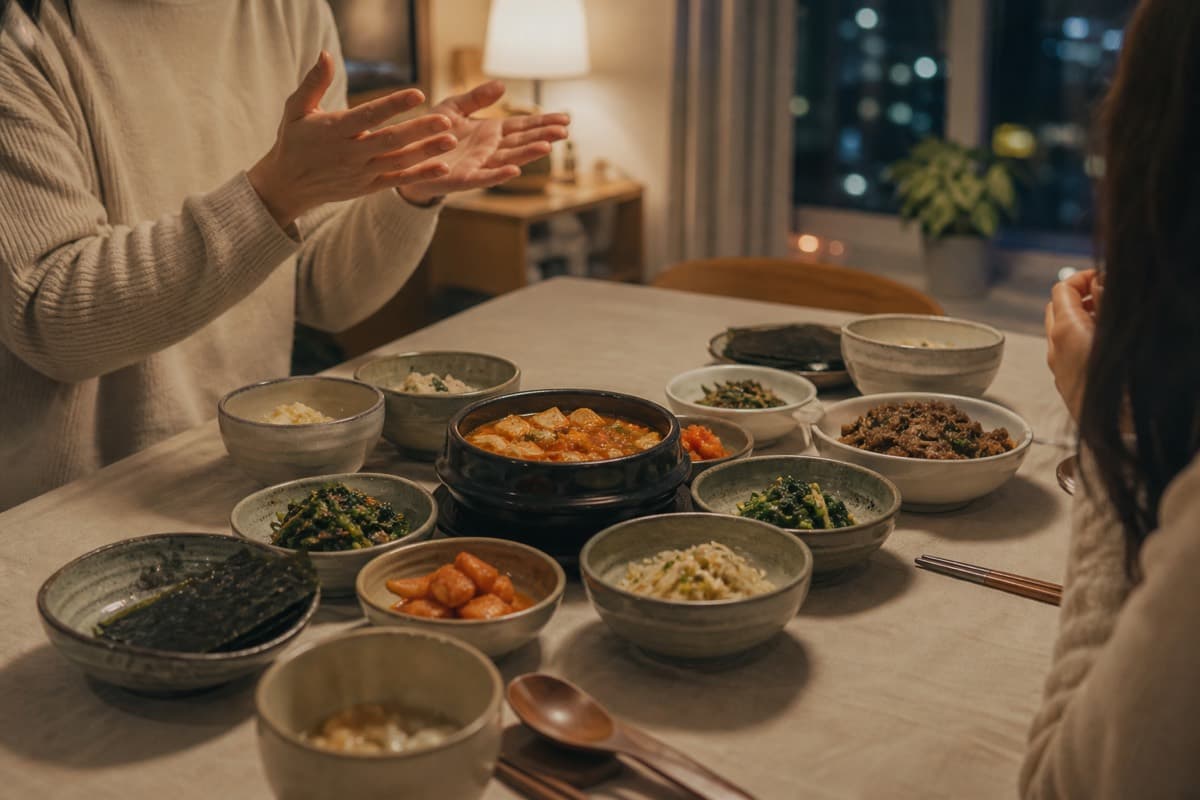
A 집들이 (jipdeuri), a Korean housewarming, asks almost nothing of your grammar and everything of your reactions. You are handed slippers, walked around four rooms, sat down in front of more food than anyone can eat, and then talked at for two hours — and the entire time your job is to respond. Two patterns from the SULSUL workbook are the whole evening. Pattern 95 — 진짜 / 완전 / 너무 — is how you turn a flat compliment into a real one: 집 진짜 좋네요 (jip jinjja jonneyo), "Your place is really nice." Pattern 19 — 그렇구나 / 그렇네요 — is how you keep someone talking without saying anything of your own: 아, 그렇구나 (a, geureokuna), "Ah, I see."
- Thank them at the door: 초대해 주셔서 감사합니다 (chodaehae jusyeoseo gamsahamnida), "Thanks for having me."
- Hand over the gift: 이거 별거 아니에요 (igeo byeolgeo anieyo), "It's nothing much."
- Compliment the place: 집 진짜 좋네요 (jip jinjja jonneyo), "Your place is really nice."
- React while they talk: 아, 그렇구나 (a, geureokuna), "Ah, I see."
- Offer to help: 뭐 도와드릴까요? (mwo dowadeurilkkayo?), "Can I help with anything?"
How do you compliment someone's new place?
The tour starts about forty seconds after you take your shoes off, and 좋아요 on its own lands like a form you filled in. Pattern 95 is three adverbs that fix that, dropped straight in front of the adjective with nothing else changed.
Them: 여기가 안방이에요. 좀 좁죠? — yeogiga anbangieyo. jom jopjyo? — "This is the main bedroom. Bit small, isn't it?"
You: 아니에요, 진짜 넓어요! — anieyo, jinjja neolbeoyo! — "Not at all, it's really spacious!"
Them: 베란다에서 산이 보여요. — berandaeseo sani boyeoyo. — "You can see the mountain from the balcony."
You: 우와, 뷰가 너무 예뻐요. — uwa, byuga neomu yeppeoyo. — "Wow, the view is so pretty."
The three are not interchangeable in tone. 진짜 (jinjja), "really," is safe with anyone, including your boss. 완전 (wanjeon), "totally," is young and casual — 완전 대박이에요 (wanjeon daebagieyo) is perfect for a friend's first apartment and odd in front of someone's parents. 너무 (neomu) started life as a word for complaints only, as in 너무 비싸요 (neomu bissayo), "too expensive," and got used so widely for good things that the rule changed to allow it; today 너무 예뻐요 is the most common compliment in the language. One more thing carries as much as the adverb: stretching the first syllable. 진~짜 좋네요 said slowly means it, and 진짜 좋네요 said flat does not.
| Situation | Say this |
|---|---|
| Thank them at the door | 초대해 주셔서 감사합니다 (chodaehae jusyeoseo gamsahamnida) |
| Hand over the gift | 이거 별거 아니에요 (igeo byeolgeo anieyo) |
| Praise the place | 집 진짜 좋네요 (jip jinjja jonneyo) |
| Praise the food | 이거 진짜 맛있어요 (igeo jinjja masisseoyo) |
| Offer to help | 뭐 도와드릴까요? (mwo dowadeurilkkayo?) |
Practice this out loud with SULSUL — the app says it, you repeat it →
What do you say when you're just listening?
Most of a 집들이 is the host telling you how they found the place, what the landlord was like, and which wall they repainted. You are not expected to contribute — you are expected to make the noise that says you are still there, and in Korean silence does not count as listening.
Them: 원래 회사 근처에서 살았는데 너무 시끄러웠어요. — wollae hoesa geuncheoeseo sallanneunde neomu sikkeureowosseoyo. — "I used to live near the office, but it was so noisy."
You: 아, 그렇구나. — a, geureokuna. — "Ah, I see."
Them: 여기는 조용해서 잠을 잘 자요. — yeogineun joyonghaeseo jameul jal jayo. — "It's quiet here, so I sleep well."
You: 맞아요, 진짜 조용하네요. — majayo, jinjja joyonghaneyo. — "You're right, it really is quiet."
그렇구나 and 그렇네요 are the same realisation at two different distances. 그렇구나 is half to yourself — a small nod when you learn something you did not know, and it is casual, so it goes to friends and people younger than you. 그렇네요 is aimed at the other person, polite, and means "you're right" more than "I didn't know that": 아, 정말 그렇네요 (a, jeongmal geureonneyo). The pronunciation is the part learners get caught on — 그렇네요 is said [그런네요], geureonneyo, with the ending nasalised, and the same thing happens to 좋네요 [존네요] and 조용하네요. Say them with a hard -ㅎ네 and you sound like you are reading. The wider set of small reactions that keep a Korean conversation alive is in Korean small talk phrases, and complimenting the food specifically is its own skill — that one is how to compliment a Korean friend's cooking.
What usually goes wrong at a Korean housewarming?
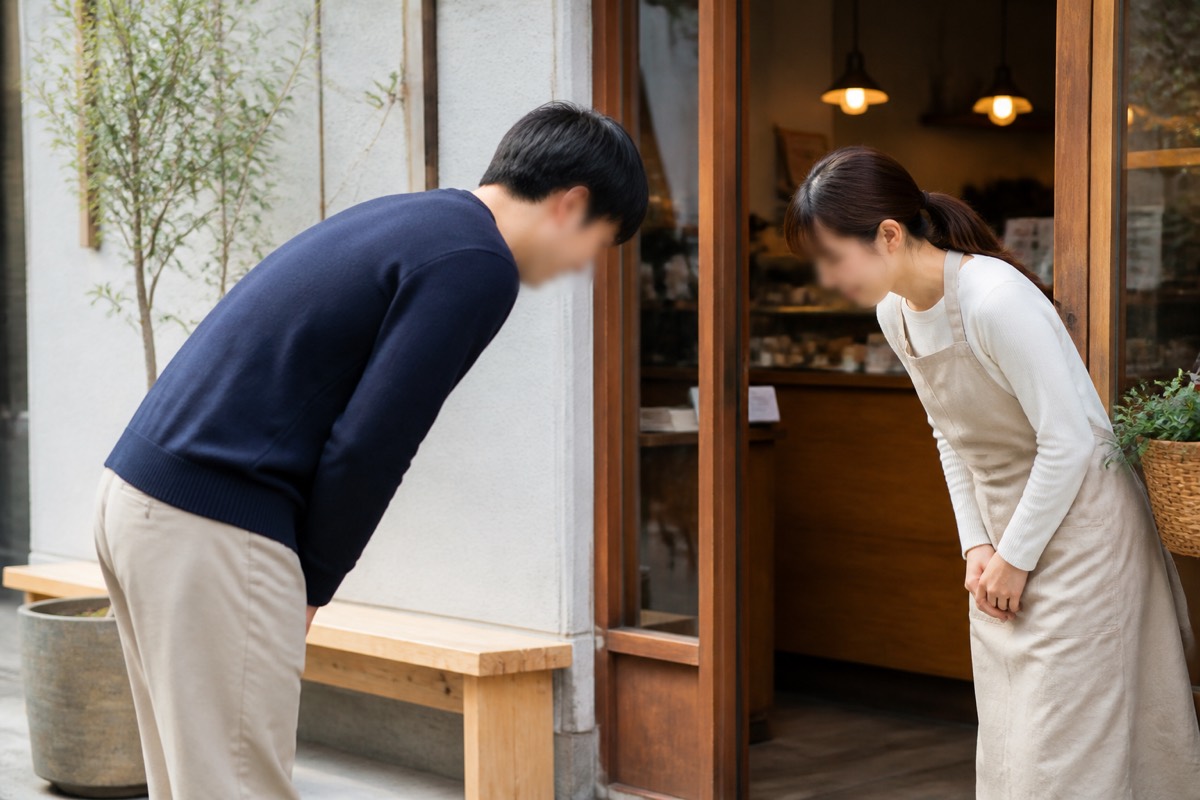
The first thing is the gift, because it is not a free choice. The two traditional 집들이 선물 (jipdeuri seonmul) are 휴지 (hyuji), toilet paper, and 세제 (seje), laundry detergent — the roll for a life that unrolls smoothly, the suds for money that multiplies. They sound like a joke to anyone who did not grow up with it, and they are still what most guests bring, usually alongside something ordinary like coffee, fruit, or a plant. A supermarket has all of it in one aisle, and the phrases for that trip are in Korean phrases for shopping at a supermarket in Korea. Hand it over with 이거 별거 아니에요, "it's nothing much," because in Korean you understate your own gift, and let the host be the one to say it is too much.
The second is what the host says about their own food. 차린 건 없지만 많이 드세요 (charin geon eopjiman mani deuseyo), "There isn't much, but please eat plenty," is said over a table with nine dishes on it and is not a statement about the food — it is the same modesty move you just made with the gift. Agreeing with it is the mistake. The reply is to eat, to say 이거 진짜 맛있어요, and to close with 잘 먹었습니다 (jal meogeotseumnida), "I ate well," when you put your spoon down. If the host's parents are there, the titles change everything about how you speak, and the whole system is laid out in how to address people in Korean.
The third is the questions you ask back. 언제 이사 오셨어요? (eonje isa osyeosseoyo?), "When did you move in?" and 집 구경 시켜 주세요 (jip gugyeong sikyeo juseyo), "Show me around," are both welcome — the tour is the point of the evening. What to leave alone is the money: how the place is paid for, under 전세 (jeonse) or 월세 (wolse), is a normal topic between close friends and an uncomfortable one from a new acquaintance. Offer to help instead. 뭐 도와드릴까요? in the kitchen, and 설거지 제가 할게요 (seolgeoji jega halgeyo), "I'll do the washing up," get turned down and still count. The day that put them in the apartment in the first place is Korean phrases for moving day in Korea, and if the evening carries on somewhere louder afterwards, that part is Korean phrases for a company dinner in Korea.
Say it out loud, not just in your head
아, 그렇구나 is worth nothing written down. It only works at the speed of someone else's sentence.
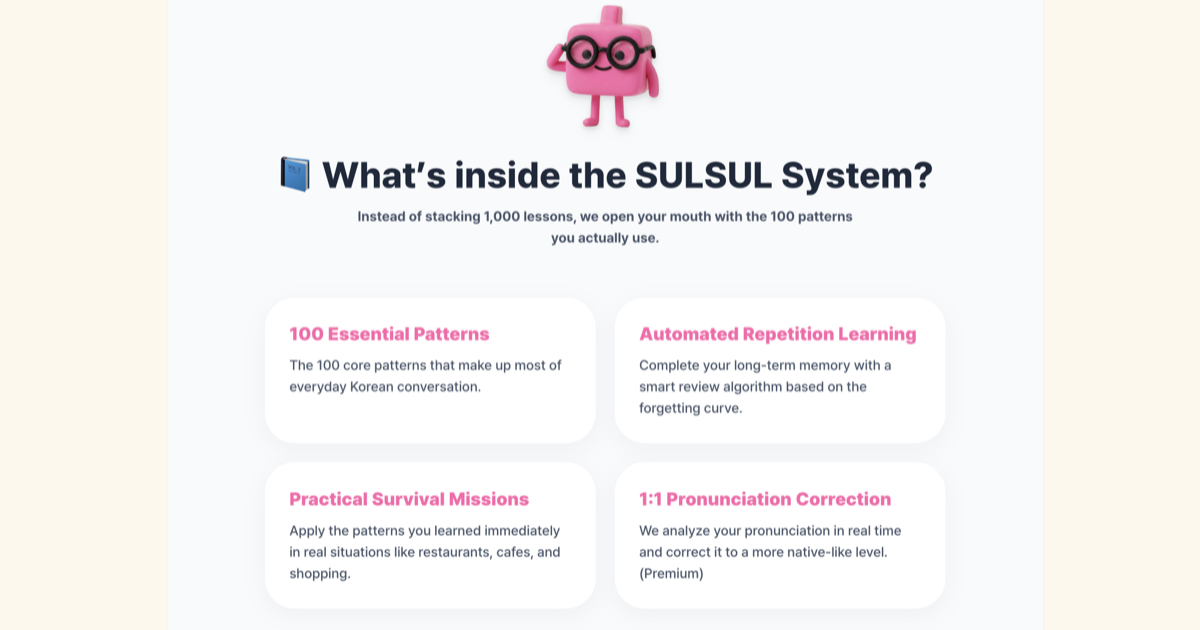
SULSUL is a speaking gym for exactly that moment: pick a survival pattern, say it out loud, get an instant fix from the AI pronunciation coach, then run the real situation as a mission. The 100-pattern PDF workbook comes along as a bonus.